























Fiber Laser vs. Diode Laser: 6 Key Differences

Quick Answer: Choose a fiber laser engraver if your main work is metal marking, serial numbers, QR codes, deep engraving, or industrial part identification. Choose a diode laser if you mainly engrave wood, leather, paper, cardboard, dark acrylic, coated materials, and beginner-friendly craft projects. For most home creators, diode is the easier starting point. For professional metal work, fiber is the stronger choice.
Choosing the right laser is not just about buying a tool. It is about choosing the engine that powers your workflow. Whether you are engraving wood, marking metal parts, or building a small production setup, your laser choice directly affects precision, speed, material compatibility, operating cost, and long-term reliability.
In this guide, fiber laser mainly refers to fiber laser marking and engraving systems, not large industrial sheet-metal fiber cutters. Diode laser refers to the desktop and prosumer diode machines commonly used for home studios, small businesses, craft shops, and beginner engraving workflows.
By the end, you will understand which type of laser engraver fits your materials, budget, workspace, and production goals.
What Is a Fiber Laser
A fiber laser generates and amplifies light inside an optical fiber doped with rare-earth elements, commonly ytterbium. Pump diodes excite the gain medium, and the fiber acts as both the amplifier and beam delivery system. The result is a highly focused beam that can mark and engrave metal surfaces with strong precision.
Fiber lasers are widely used for metal marking, part identification, QR codes, logos, serial numbers, tool engraving, jewelry, electronics, and industrial traceability. They are especially useful when the mark needs to be permanent, sharp, high contrast, and repeatable.
1. Key Advantages of Fiber Lasers
- Excellent beam quality: fiber lasers can produce a small focal spot, high energy density, and sharp detail on metal surfaces.
- Strong metal performance: they are well suited to stainless steel, aluminum, brass, copper, titanium, anodized aluminum, and many industrial parts.
- High efficiency: many fiber systems convert power efficiently and can run for long production cycles.
- Low maintenance: fiber systems generally have fewer optical alignment tasks than some older laser technologies.
- Industrial repeatability: they are built for consistent marks, codes, and logos across repeated parts.
2. Limitations of Fiber Lasers
- Higher upfront cost: fiber laser systems usually cost more than entry diode laser engravers.
- Not ideal for craft materials: fiber lasers are not the natural first choice for wood, leather, paper, or DIY decor.
- Clear acrylic is not their strength: CO2 lasers are usually a better choice for clear acrylic cutting and polished acrylic edges.
- Learning curve: metal marking requires correct focus, speed, power, frequency, lens choice, and material preparation.
3. Common Fiber Laser Applications
- Metal marking and engraving for serial numbers, QR codes, logos, and labels
- Industrial part identification and traceability
- Jewelry, tools, knives, tags, and hardware marking
- Electronics, medical instruments, and precision components
- Selected deep engraving or color marking when using the right fiber or MOPA setup
What Is a Diode Laser
A diode laser is a semiconductor laser. It emits coherent laser light when current passes through the diode junction. In desktop laser engravers, blue diode modules are commonly used because they are affordable, compact, and effective on many non-metal craft materials.
Diode lasers are popular because they give beginners and small businesses a practical entry point. They can engrave wood, leather, paper, cardboard, bamboo, dark acrylic, coated tumblers, and many craft blanks without the cost and complexity of a fiber or CO2 system.
1. Key Advantages of Diode Lasers
- Lower entry cost: diode lasers are usually more affordable than fiber or CO2 systems.
- Beginner-friendly workflow: they are easier to learn for basic engraving, small gifts, and craft production.
- Strong non-metal performance: diode lasers work well on wood, leather, paper, cardboard, bamboo, and many darker materials.
- Compact setup: enclosed diode models can fit home studios, craft rooms, classrooms, and small workshops.
- Good for small business products: common projects include coasters, signs, keychains, ornaments, patches, tags, and personalized gifts.
2. Limitations of Diode Lasers
- Limited bare-metal engraving: most diode lasers cannot deeply engrave bare metal like a fiber laser.
- Clear acrylic is difficult: standard blue diode lasers struggle with clear acrylic because the material does not absorb the wavelength well.
- Material testing matters: color, coating, thickness, glue layer, and surface finish can change the result.
- Thermal management matters: higher-power diode modules need good cooling, air assist, and careful settings.
- Not a production metal marker: diode lasers can mark some coated metals or treated surfaces, but they are not fiber laser replacements.
3. Common Diode Laser Applications
- Wood engraving and light wood cutting
- Leather patches, wallets, notebooks, and tags
- Paper, cardboard, ornaments, and craft projects
- Dark acrylic tags and signs
- Coated tumbler engraving with the right rotary workflow
- Small-batch gift production for home businesses and craft sellers

Fiber Laser vs Diode Laser Comparison
| Category | Fiber Laser | Diode Laser |
|---|---|---|
| Best For | Metal marking, serial numbers, QR codes, logos, industrial parts | Wood, leather, paper, dark acrylic, coated materials, craft gifts |
| Main Strength | Sharp, permanent, high-contrast metal marks | Affordable, versatile, beginner-friendly non-metal engraving |
| Metal Engraving | Strong for direct metal marking and deeper engraving | Limited to coated, treated, or selected surface marking |
| Wood and Leather | Possible in some cases, but not the typical choice | Excellent and common |
| Clear Acrylic | Not the usual choice; CO2 is better for clear acrylic | Difficult and often not ideal |
| Typical Buyer | Industrial shops, jewelry studios, production teams, metal businesses | Makers, home users, schools, craft sellers, small gift businesses |
| Upfront Cost | Higher | Lower |
| Learning Curve | Moderate to advanced for metal marking workflows | Beginner-friendly for simple engraving and cutting |
6 Key Differences That Actually Matter
1. Material Compatibility
The biggest difference is material fit. Fiber lasers are strongest on metals, while diode lasers are strongest on common craft materials. If your work involves stainless steel, aluminum, brass, copper, titanium, tools, tags, or machine parts, fiber is usually the better category. If your work involves wood, leather, paper, cardboard, bamboo, dark acrylic, or coated craft blanks, diode is usually more practical.
2. Metal Marking and Deep Engraving
Fiber lasers are the clear winner for professional metal marking. They can create clean, permanent marks on bare metals and are widely used for industrial traceability. Diode lasers can sometimes mark coated metals, anodized aluminum, or treated surfaces, but they should not be described as deep metal engraving machines.
3. Wood Leather and Craft Projects
Diode lasers are usually the better fit for makers, DIY users, and craft sellers. A diode laser can handle small wood signs, leather patches, paper projects, ornaments, tags, coasters, and gift products. Fiber lasers are not usually chosen for these materials because their wavelength and workflow are aimed more toward metals and industrial surfaces.
4. Clear Acrylic and Transparent Materials
Neither standard fiber nor standard blue diode lasers are the best first choice for clear acrylic cutting. Diode lasers often struggle because clear acrylic does not absorb blue light well. Fiber lasers are not the normal acrylic-cutting category either. If clear acrylic is your main material, a CO2 laser is usually the right direction.
5. Cost and Return on Investment
Diode lasers win on entry cost. They make more sense when the user is testing a hobby, starting a small gift business, or learning laser engraving at home. Fiber lasers cost more upfront, but they can pay off faster when the business depends on metal marking, part identification, fast repeat jobs, or permanent industrial marks.
6. Workspace Safety and Setup
Both laser types require ventilation, eye protection, safe materials, and supervision. Diode users often underestimate smoke, odor, fire risk, air assist, and material testing when cutting wood or leather. Fiber users need to pay attention to reflective surfaces, focusing, fixtures, and metal marking safety. The safer choice is not just the laser type; it is the full setup around the machine.
Which One Should You Choose
1. Choose a Fiber Laser If You Need Metal Work
Choose a fiber laser if your core workflow involves metal marking, deep engraving, industrial parts, tools, jewelry, QR codes, serial numbers, or long-term part traceability.
- You need clean, permanent marks on stainless steel, aluminum, brass, copper, or titanium.
- You care about repeatability, uptime, and production consistency.
- You are running a business where metal marking is not occasional but central to the workflow.
2. Choose a Diode Laser If You Need Craft and Gift Work
Choose a diode laser if your core workflow involves wood, leather, paper, cardboard, dark acrylic, coated materials, and personalized gifts.
- You want a lower-cost entry point into laser engraving.
- You make coasters, ornaments, keychains, patches, signs, tags, or custom gifts.
- You need a compact machine for a home studio, craft room, classroom, or small workshop.
3. Choose by Material Not by Wattage Alone
Wattage matters, but it is not the whole decision. A high-power diode laser is still not the same as a fiber laser for metal marking. A fiber laser is still not the same as a diode laser for wood and craft materials. Start with your material list, then choose the laser type that matches how those materials absorb the wavelength.
Best Creality Falcon Picks by Workflow
If you want a practical buying path, match the machine to the work you actually plan to do. A beginner making wood gifts does not need the same laser as a studio marking stainless steel tags or testing multi-material production.
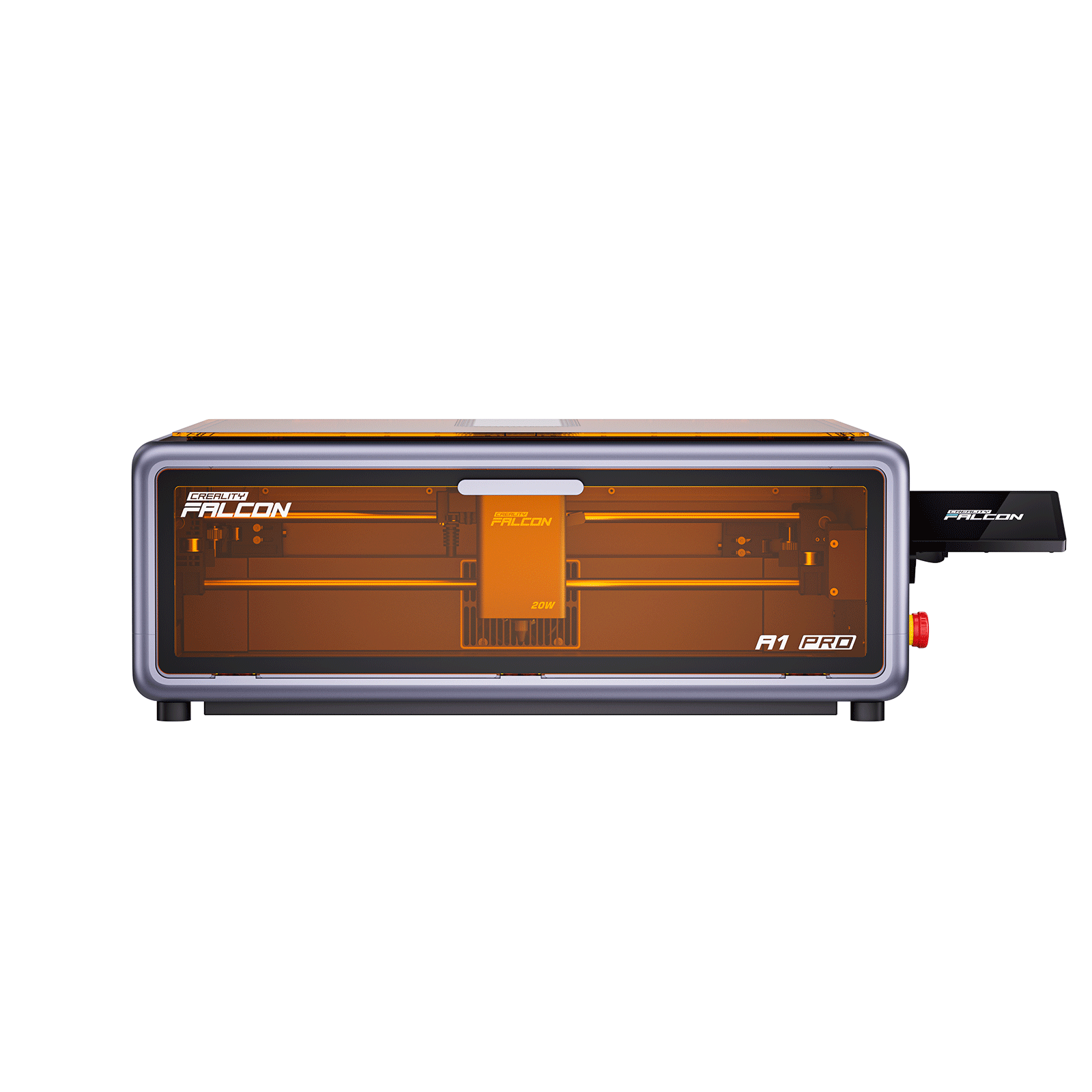
1. Creality Falcon A1 Pro for Diode Laser Craft Work
Why Choose This Product: Choose Falcon A1 Pro if you want an enclosed diode laser for wood, leather, paper, bamboo, cardboard, dark acrylic, coated materials, and beginner-to-advanced gift projects.
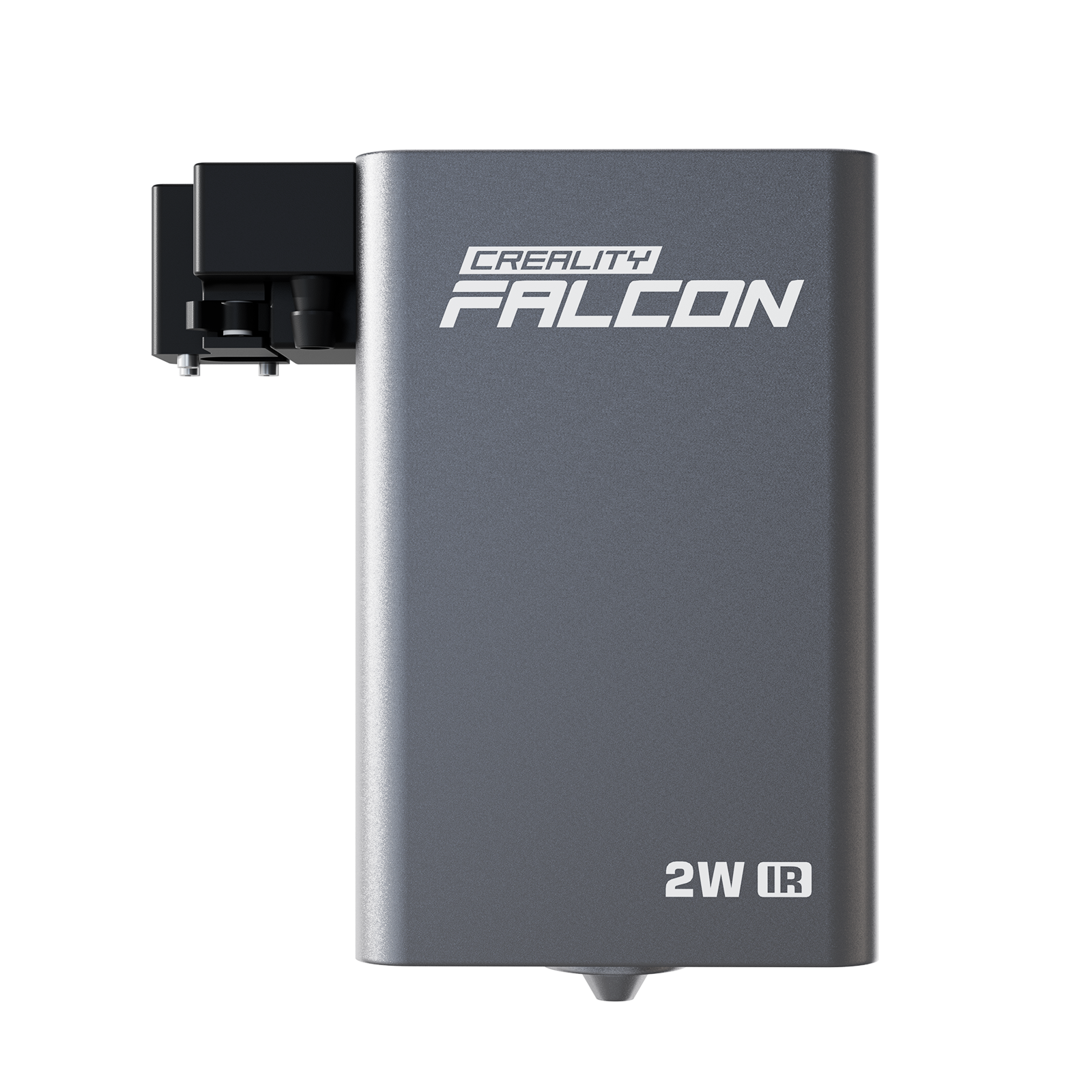
Falcon A1 Pro is a strong diode choice for makers who want a safer and cleaner desktop workflow. Its 20W diode laser supports common non-metal craft materials, while the optional 2W IR module expands the workflow into selected metal and plastic surface marking depending on configuration. That makes it useful for users who want to explore gift products, home decor, tags, patches, coasters, and coated tumbler projects without jumping directly to a fiber laser.

- Best for: beginners, home studios, gift personalization, small workshops, and everyday engraving.
- Not ideal for: deep bare-metal engraving, industrial metal marking, or frequent clear acrylic cutting.
- Key boundary: results vary by material color, coating, thickness, and surface finish, so users should always run a material test before production.
2. Creality Falcon T1 for Fiber MOPA UV and Multi-Material Work
Why Choose This Product: Choose Creality Falcon T1 if you need a high-end multi-module workstation for metal marking, MOPA workflows, UV engraving, diode cutting, glass or ceramic detail, and professional multi-material production.

Creality Falcon T1 is not a standard beginner diode engraver. It is a high-end 5-in-1 laser workstation with 20W diode, 40W diode, 20W fiber, 60W MOPA, and 5W UV module options. That matters because fiber vs diode is not always enough for advanced users. Some studios need diode for wood and acrylic, fiber for metal marking, MOPA for color or pulse-controlled metal work, and UV for delicate glass, ceramic, crystal, or plastic marking.
- Best for: professional creators, jewelry studios, product customization shops, and small production teams.
- Not ideal for: low-cost beginner use, simple hobby engraving, or users who only need wood gifts.
- Key boundary: T1 is strongest when the user needs multiple laser processes, not when one simple diode workflow is enough.
Future Trends in Fiber and Diode Lasers
Laser technology keeps moving toward more integrated workflows. Diode lasers are becoming more powerful, more enclosed, and easier for beginners to use. Fiber lasers are improving in pulse control, color marking, and specialized metal workflows. More creators are also using hybrid setups, where one machine handles craft materials and another handles metal marking.
This is why multi-process workstations are becoming more important. A shop may use diode for wood and leather, fiber for metal tags, MOPA for color effects, and UV for glass or fine plastic marks. The future is not one laser replacing every other laser. It is choosing the right laser source for each material and result.
Fiber Laser vs Diode Laser FAQ
1. Is a Fiber Laser Better Than a Diode Laser?
A fiber laser is better for metal marking, serial numbers, QR codes, industrial parts, and deep metal engraving. A diode laser is better for wood, leather, paper, cardboard, dark acrylic, and beginner craft projects. The better choice depends on the material and final result you need.
2. Can a Diode Laser Engrave Metal?
A diode laser can mark some coated metals, anodized aluminum, or treated surfaces, but most diode lasers cannot deeply engrave bare metal like a fiber laser. If metal marking is your main business, choose fiber, MOPA, or another metal-focused laser source.
3. Can a Fiber Laser Engrave Wood?
A fiber laser can affect some organic materials, but it is not the normal choice for wood engraving. Diode and CO2 lasers are much more common for wood because their wavelengths are better suited to organic materials and craft workflows.
4. Which Laser Is Better for Clear Acrylic?
For clear acrylic, a CO2 laser is usually better than both standard fiber and blue diode lasers. Diode lasers often struggle with clear acrylic because the material does not absorb blue light well. Fiber lasers are mainly designed for metals, not acrylic cutting.
5. Which Laser Is Better for Beginners?
For most beginners, an enclosed diode laser is easier and more affordable. It fits common projects such as wood coasters, leather patches, ornaments, signs, tags, and custom gifts. Fiber lasers are better for users who already know they need professional metal marking.
6. Is MOPA Fiber Better Than Standard Fiber?
MOPA fiber is better when you need adjustable pulse control, selected color marking on stainless steel, cleaner plastic marking, anodized aluminum marks, or more control over heat-sensitive surfaces. Standard fiber can still be the better choice for simple, fast, high-contrast metal marking.
Conclusion
There is no single best laser for every user. There is only the best laser for your material, workspace, budget, and output goal.
If your priority is metal engraving, permanent marks, high precision, and industrial repeatability, a fiber laser is usually the right choice. If your priority is wood, leather, craft materials, lower cost, and beginner-friendly personalization, a diode laser is usually the better starting point.
Start with your material list, your expected finish quality, and your production volume. Once those are clear, the right laser choice becomes much easier.

Lower Cost, Greater Potential
5-in-1 Laser Workstation

Recent News

12 World Cup Laser Engraving Ideas for Fans
Explore world cup laser engraving ideas for fan gifts, tumblers, coasters, signs, and safe soccer-inspired designs makers can...

What Materials Does a Laser Cutter Cut Safely
Find out what materials does a laser cutter cut, which plastics to avoid, and how CO2, diode, and...

7 Best Laser Engravers Under $1000
Quick Answer:The best laser engraver under $1000 should be chosen by total setup cost, not machine price alone.For most...