
























Desktop Fiber Laser Engraver Guide: Uses, Cost, Safety, and Best Pick

Quick Answer: A desktop fiber laser engraver is best for metal marking, serial numbers, QR codes, jewelry, tools, industrial parts, anodized aluminum, and selected plastic marking. It is not the best first choice for wood, leather, clear acrylic, or general craft cutting. If you want fiber, MOPA, UV, and diode workflows in one advanced desktop workstation, Creality Falcon T1 is the strongest Creality Falcon product fit.
As laser engraving technology evolves, desktop fiber laser engravers have become powerful tools for small workshops, jewelry studios, product customization shops, and creative businesses. They are known for precision, speed, and clean metal marking, especially on stainless steel, aluminum, brass, copper, titanium, and anodized surfaces.
This guide explains how desktop fiber lasers work, what they are best used for, how much they usually cost, what safety features matter, and how to choose the right setup for your needs.
What Is a Desktop Fiber Laser
A desktop fiber laser is a compact laser marking system that uses an optical fiber as the active gain medium. The fiber is usually doped with rare-earth elements such as ytterbium, erbium, or neodymium. Pump diodes excite the ions inside the fiber, and the system amplifies the laser beam before focusing it onto the workpiece.

Unlike CO2 lasers, which use a gas tube, or diode lasers, which use semiconductor laser modules, fiber lasers are designed primarily for metal marking and high-contrast surface engraving. Most desktop fiber engravers use a galvo scanner head to move the beam quickly across the material surface.
1. How a Desktop Fiber Laser Works
A desktop fiber laser usually works through 4 main steps:
- A pump source, typically laser diodes, excites rare-earth ions inside the fiber.
- Those ions emit photons, which are amplified as they travel through the optical fiber.
- The amplified beam is delivered through the optical path toward the scan head.
- A galvo scanner rapidly directs the beam across the material surface for marking or engraving.
A typical desktop fiber laser integrates:
- The fiber laser source
- A controller and power system
- A galvo scanning head
- A focus system
- A work area or enclosure
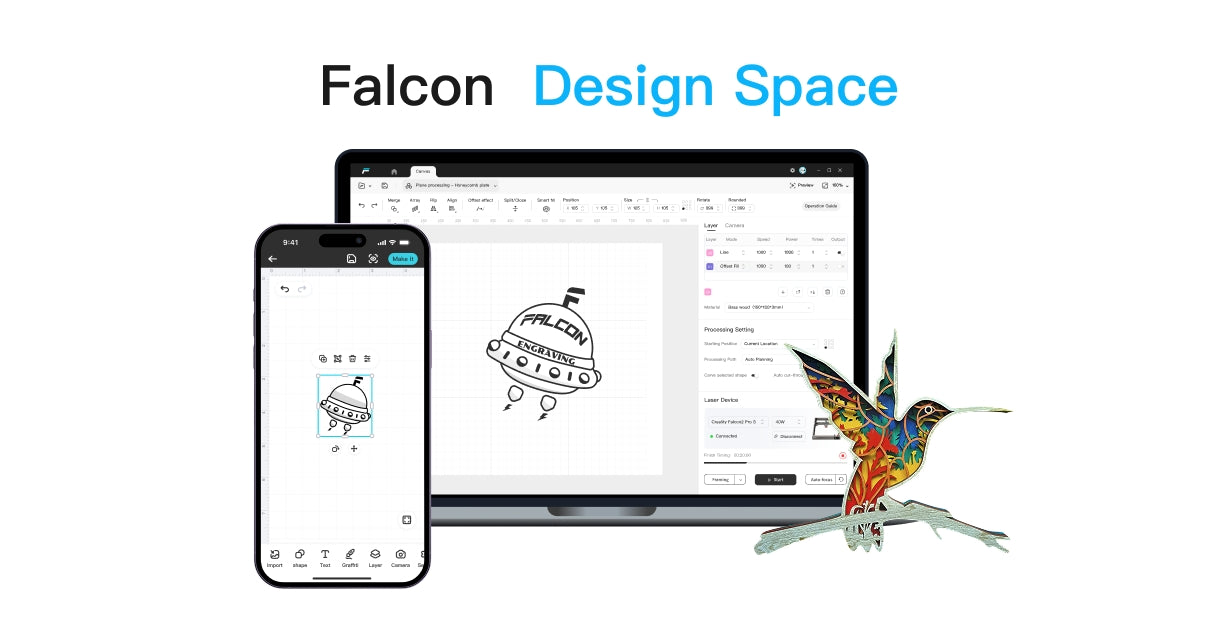
- Software for layout, parameter control, and file processing
This design allows for fast marking speed, fine detail, and strong repeatability, especially when engraving metal parts, tools, tags, and small production items.
Advantages and Disadvantages of Desktop Fiber Lasers
Desktop fiber lasers are powerful, but they are not the right answer for every buyer. The best way to choose one is to understand what they do extremely well and where their limits appear in real use.
1. Advantages of Desktop Fiber Lasers
- High precision and speed: fiber lasers produce a focused beam that can create fine text, QR codes, logos, and serial numbers quickly.
- Excellent metal processing: they are strong for engraving, marking, annealing, and selected thin-metal workflows depending on power and system type.
- Durable marks: fiber laser marks can be permanent and resistant to handling, cleaning, and industrial wear.
- Low maintenance: many fiber systems require less optical alignment and fewer consumables than CO2 laser systems.
- Compact production fit: desktop galvo systems can fit small workshops, jewelry studios, product customization shops, and back-room production spaces.
2. Disadvantages of Desktop Fiber Lasers
- Higher initial cost: desktop fiber lasers usually require a larger upfront investment than diode lasers or entry-level CO2 machines.
- Limited organic-material workflow: fiber lasers are not the natural first choice for wood, leather, paper, or clear acrylic craft projects.
- Stricter safety requirements: many fiber systems operate at invisible near-infrared wavelengths, so enclosure, interlocks, and proper eye protection matter.
- Learning curve: users must understand focus, frequency, speed, power, lens field, material surface, and fixture stability.
- Not a universal cutter: desktop fiber engravers are mainly marking and engraving machines, not general-purpose sheet-metal cutting systems.
If metal is your primary material, a desktop fiber laser can be one of the most efficient engraving choices. If your main projects are wood signs, leather patches, clear acrylic, or paper crafts, another laser type may fit better.
Common Applications and Supported Materials
Desktop fiber lasers are used when the mark needs to be precise, permanent, and repeatable. They are common in metal product businesses, tool shops, jewelry studios, electronics, medical device marking, and custom personalization.
1. Metals
Metals are where desktop fiber lasers perform best. Typical materials include:
- Stainless steel for serial numbers, logos, QR codes, and branding
- Aluminum, including anodized aluminum for high-contrast marks
- Brass, copper, titanium, iron, and selected alloys
- Precious metals such as gold and silver for jewelry engraving
- Tools, knives, tags, hardware, and industrial parts

2. Plastics and Coated Materials
Many desktop fiber lasers can mark selected plastics and coated materials, but results depend heavily on the material chemistry, color, additives, and surface finish. Some plastics mark cleanly, while others melt, burn, or produce poor contrast.
Common use cases include:
- Industrial plastic part identification
- Electronic component marking
- Product labels and serial codes
- Anodized aluminum surface marking
- Painted or coated metal removal
3. Jewelry Tools and Product Customization
Desktop fiber lasers are especially useful for small, high-value items because the galvo workflow is fast and precise. Jewelry studios, product customization shops, and repair businesses often use them for:
- Ring engraving
- Watch part marking
- Knife and tool personalization
- Metal business cards
- Small batch branded accessories
6 Key Features of a Desktop Fiber Laser Engraver
A desktop fiber laser is a significant investment, so the buying decision should go beyond wattage. The most important features are the ones that affect your real materials, part size, software workflow, safety, and repeatability.
1. Laser Power
- 20W: entry-level marking, jewelry engraving, serial numbers, logos, and light surface engraving.
- 30W: faster marking, deeper engraving, and better production headroom.
- 50W and above: stronger for deeper engraving, faster throughput, and selected thin-metal workflows.
Choose power based on your real applications, not just the highest number on the spec sheet.
2. Work Area and Form Factor
Desktop fiber lasers often use a galvo marking area, which may be smaller than the bed of a diode or CO2 gantry machine. This is normal. Galvo systems trade large work area for speed, precision, and repeatable marking.
- Compact galvo systems are better for tags, jewelry, tools, and small parts.
- Larger enclosed systems are better for safer operation and more production flexibility.
- Conveyor or fixture options matter if you plan to batch mark many items.
3. Software and Controller
Good software is essential for productivity. Look for clean parameter control, stable file import, rotary support, and compatibility with the design workflow you already use.
- Common file needs include SVG, DXF, PNG, JPG, and PDF workflows.
- Rotary support matters for rings, cylindrical parts, tumblers, and round objects.
- Parameter libraries and test arrays help reduce wasted material.
4. Safety Features
Fiber laser safety should never be treated as optional. Because many fiber systems use an invisible 1064 nm wavelength, the operator may not see the beam even when it is dangerous.
- Fully enclosed design
- Safety interlocks
- Emergency stop button
- Laser key lock
- Reliable fume extraction
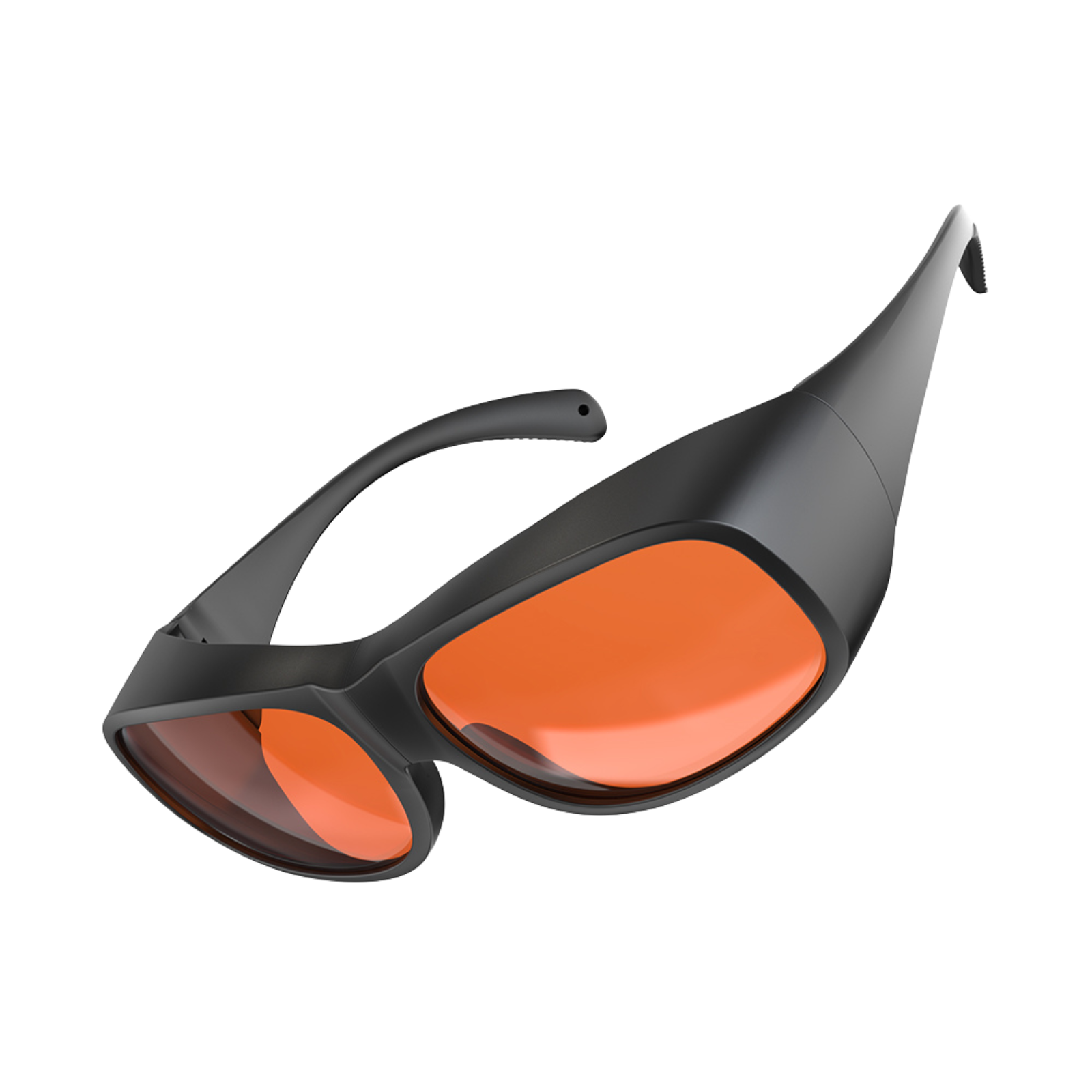
- Certified safety glasses rated for the correct wavelength and optical density
5. Focusing System
Focus affects marking quality, contrast, and repeatability. Manual focus can work well after practice, but autofocus or guided focusing can reduce setup time and user error.
- Autofocus: faster setup and more consistent results across repeated jobs.
- Manual focus: precise once mastered, but more dependent on operator skill.
6. Build Quality and Support
A rigid frame, stable optics, reliable controller, and clear documentation are important for long-term performance. Support also matters because fiber laser users often need help with settings, rotary setup, software, and material-specific results.
- Rigid structure improves marking consistency.
- Good documentation shortens the learning curve.
- Responsive support reduces downtime for small businesses.
How Much Does a Desktop Fiber Laser Engraver Cost
In the U.S. market, desktop fiber laser engravers commonly range from about $1,200 to more than $10,000, depending on laser power, enclosure, galvo quality, software, rotary support, automation, and whether the machine uses standard fiber, MOPA, UV, or a multi-module design.
- Entry-level systems: often around $1,200 to $2,200, commonly used for jewelry engraving, small metal parts, and light personalization.
- Mid-range systems: often around $2,800 to $4,500, usually with improved scanners, stronger marking performance, and better workflow features.
- Professional systems: often $5,000 to $10,000 or more, especially when they include enclosed safety design, higher power, MOPA capability, automation, or industrial-grade components.
These are reference ranges, not live prices. Current promotions, bundles, taxes, accessories, and final checkout prices should always be checked on the official product page before purchase.
Creality Falcon T1 for Desktop Fiber and MOPA Workflows
If you want a desktop fiber workflow but also need more than one laser source, fiber laser engraver use cases are exactly where Creality Falcon T1 becomes relevant.
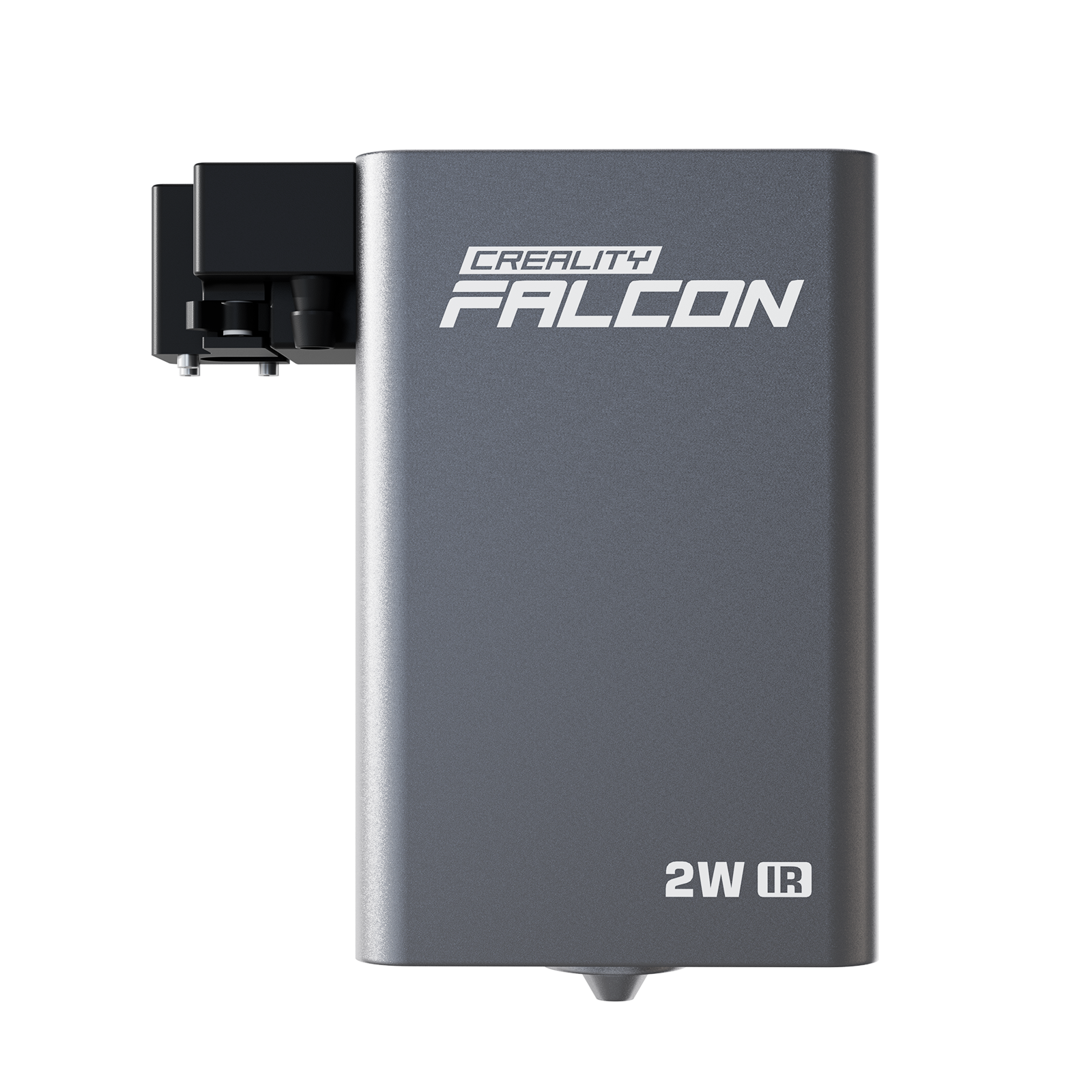
Creality Falcon T1 is a high-end 5-in-1 laser workstation, not a standard beginner diode engraver. It supports multiple laser modules, including 20W diode, 40W diode, 20W fiber, 60W MOPA, and 5W UV. That means it can support metal marking, MOPA color marking, UV fine engraving, diode cutting, and mixed-material personalization in one platform.

1. Why Creality Falcon T1 Fits This Category
Most desktop fiber laser engravers focus mainly on metal. Creality Falcon T1 goes further by combining several laser sources for different materials and results. The 20W fiber module supports metal marking and engraving, while the 60W MOPA module is better suited to advanced metal marking, selected color effects, and pulse-controlled workflows.
The 5W UV module expands the machine into glass, crystal, ceramics, and delicate plastics. The diode modules support wood, acrylic-style craft materials, leather, bamboo, and other non-metal workflows. This makes T1 a better fit for users who want a multi-material workstation rather than a single-purpose desktop fiber marker.
2. Who Should Choose Creality Falcon T1
- Professional creators who need metal, glass, plastic, wood, and coated material workflows
- Jewelry studios and product customization shops
- Small production teams that need repeatable marking and batch work
- Users who want fiber, MOPA, UV, and diode modules in one platform
- Advanced makers who have outgrown single-source diode or standard fiber workflows
3. Who Should Not Choose Creality Falcon T1
- Beginners who only want basic wood engraving
- Budget buyers looking for the lowest-cost first laser
- Users who only need occasional hobby engraving
- People who mainly cut large wood boards or large acrylic signs
Creality Falcon T1 makes the most sense when desktop fiber marking is only one part of a broader production workflow.

If you only need simple wood gifts, it is more machine than necessary. If you need metal marking, MOPA, UV, diode, camera-assisted positioning, and repeatable production options, it becomes much more relevant.
Setting Up a Desktop Fiber Laser
Getting started with a desktop fiber laser is usually more straightforward than many buyers expect, but safety and calibration still matter.
1. Basic Setup Steps
- Unbox the machine and assemble any modular components.
- Install the software and latest drivers.
- Connect the machine through the supported connection method.
- Power on and verify emergency stop and safety functions.
- Calibrate focus using the manual or autofocus system.
- Import a test design and set parameters.
- Run a supervised test job with ventilation active.
Always begin with test materials before engraving final parts. Metal type, coating, surface finish, and focus height can change the final mark.
Safety First Essential Operating Practices
Fiber lasers demand strict safety discipline. A desktop format does not remove the need for proper protection.
- Eye protection: use certified laser safety glasses rated for the correct wavelength and optical density.
- Ventilation: use a proper fume extraction system, especially when marking coated metals, plastics, or unknown surfaces.
- Enclosure and interlocks: operate with safety covers closed and interlocks functioning.
- Fire prevention: keep a suitable fire extinguisher nearby and never leave the laser unattended.
- Material safety: avoid PVC, vinyl, unknown plastics, and unknown coatings unless the material is confirmed laser-safe.
- Workspace discipline: keep the work area clean, stable, and free of reflective clutter.
Maintenance Tips for Long-Term Performance
Proper maintenance protects your investment and keeps marking results consistent.
- Clean lenses and protective windows regularly.
- Keep the machine free from dust, metal particles, and debris.
- Check fixtures, rotary attachments, and focus tools before batch work.
- Update software and firmware when available.
- Operate within recommended temperature and humidity ranges.
- Contact professional support if power, focus, or marking consistency changes suddenly.
Proactive care helps extend machine lifespan and reduces downtime, especially for small businesses that rely on repeat orders.
Common Buyer Concerns Before Buying a Desktop Fiber Laser
1. Can It Engrave Wood or Acrylic
A desktop fiber laser is not the best first choice for wood, leather, or clear acrylic. It is designed mainly for metal marking and selected plastic or coated-material workflows. If wood, leather, or acrylic cutting is your main goal, a diode or CO2 laser may fit better.
2. Can It Cut Metal
Most desktop fiber laser engravers are primarily marking and engraving machines, not structural metal cutters. Some higher-power systems can cut very thin metals or remove coatings, but they should not be confused with industrial sheet-metal cutting machines.
3. Is 20W Enough
For jewelry engraving, serial numbers, light logos, anodized aluminum marking, and small metal part identification, 20W can be enough. If you need deeper engraving, faster production, or more metal headroom, 30W, 50W, MOPA, or higher-power systems may be better.
4. Do I Need MOPA
You may need MOPA if you want more pulse control, selected stainless steel color marking, better control on plastics, anodized aluminum marking, or more precise heat management. If you only need simple black marks on metal, standard fiber may be enough.
5. Is It Safe for Home Use
A desktop fiber laser can be used in a small workspace only when safety is handled correctly. Enclosure, interlocks, laser safety glasses, ventilation, fire prevention, and material control are essential. Do not treat a desktop machine as automatically safe just because it is compact.
Desktop Fiber Laser Engraver FAQ
1. What Can a Desktop Fiber Laser Engrave?
A desktop fiber laser can engrave and mark stainless steel, aluminum, brass, copper, titanium, anodized aluminum, precious metals, tools, tags, jewelry, and many industrial parts. Some systems can also mark selected plastics and coated materials.
2. Can a Desktop Fiber Laser Cut Metal?
Desktop fiber laser engravers are mainly designed for marking and engraving, not structural metal cutting. Higher-power systems may cut very thin metals or remove coatings, but thick metal cutting usually requires a dedicated industrial fiber cutting machine.
3. Is a Fiber Laser Better Than a Diode Laser?
A fiber laser is better for metal marking and engraving. A diode laser is better for common craft materials such as wood, leather, paper, cardboard, bamboo, dark acrylic, and coated gift items. The right choice depends on the material and desired result.
4. What Is the Difference Between Fiber and MOPA?
MOPA is a more advanced fiber laser architecture that allows wider pulse-width and frequency control. This gives users more flexibility for plastics, anodized aluminum, selected color marking on stainless steel, and heat-sensitive surfaces.
5. Can a Fiber Laser Engrave Wood or Clear Acrylic?
A fiber laser is not the typical choice for wood or clear acrylic. Wood and leather are usually better suited to diode or CO2 lasers, while clear acrylic is usually better suited to CO2 lasers.
6. What Is the Best Desktop Fiber Laser for Small Business?
The best choice depends on what you sell. For simple metal tags and serial numbers, a standard 20W or 30W fiber system may be enough. For mixed metal, MOPA, UV, and diode workflows, Creality Falcon T1 is a stronger multi-process option.
The Future of Desktop Fiber Lasers
Desktop fiber laser technology continues to evolve quickly. Key trends include better power efficiency, more compact enclosed designs, smarter software, AI-assisted layout tools, automated positioning, and hybrid systems that combine multiple laser types.
As users ask for more flexible machines, the market is moving beyond single-source systems. More creators want one workstation that can handle metal, plastic, glass, ceramic, coated materials, and non-metal craft workflows. This is why multi-module machines like Creality Falcon T1 are becoming more relevant for advanced creators and small production teams.
Conclusion
Desktop fiber lasers have changed what small workshops and creative businesses can do with metal marking. They bring industrial-style precision into more compact and accessible machines.
If your main work is metal marking, serial numbers, jewelry engraving, tool personalization, QR codes, and industrial part identification, a desktop fiber laser can be a smart investment. If your main work is wood, leather, clear acrylic, or general crafts, another laser type may be more practical.
For users who want more than standard fiber marking, Creality Falcon T1 offers a broader path with fiber, MOPA, UV, and diode workflows in one workstation. It is not the cheapest beginner option, but it is a strong fit when professional multi-material capability matters.
Lower Cost, Greater Potential
5-in-1 Laser Workstation

Recent News

12 World Cup Laser Engraving Ideas for Fans
Explore world cup laser engraving ideas for fan gifts, tumblers, coasters, signs, and safe soccer-inspired designs makers can...

What Materials Does a Laser Cutter Cut Safely
Find out what materials does a laser cutter cut, which plastics to avoid, and how CO2, diode, and...

7 Best Laser Engravers Under $1000
Quick Answer:The best laser engraver under $1000 should be chosen by total setup cost, not machine price alone.For most...