

























The Complete Guide to Choosing Acrylic Sheets for Laser Cutting

This blog has everything you need to know about using acrylic sheets for laser cutting and engraving.
Keep scrolling to get your questions answered—and take your laser engraving game to the next level.
What is Laser Cut Acrylic
Laser-cut acrylic refers to acrylic sheets that have been precisely shaped or patterned using a laser engraver or laser cutter instead of traditional cutting tools.
In this process, a high-energy laser—either a CO₂ laser or a high-power diode laser—melts or vaporizes the acrylic along a programmed path, creating smooth, polished edges and highly accurate cuts.

Why Acrylic Is Ideal for Laser Cutting
Thermoplastic behavior: acrylic melts cleanly under laser heat and resolidifies into glossy, flame-polished edges.
High precision: laser beams can cut detailed shapes, small text, logos, and intricate patterns that mechanical tools cannot achieve.
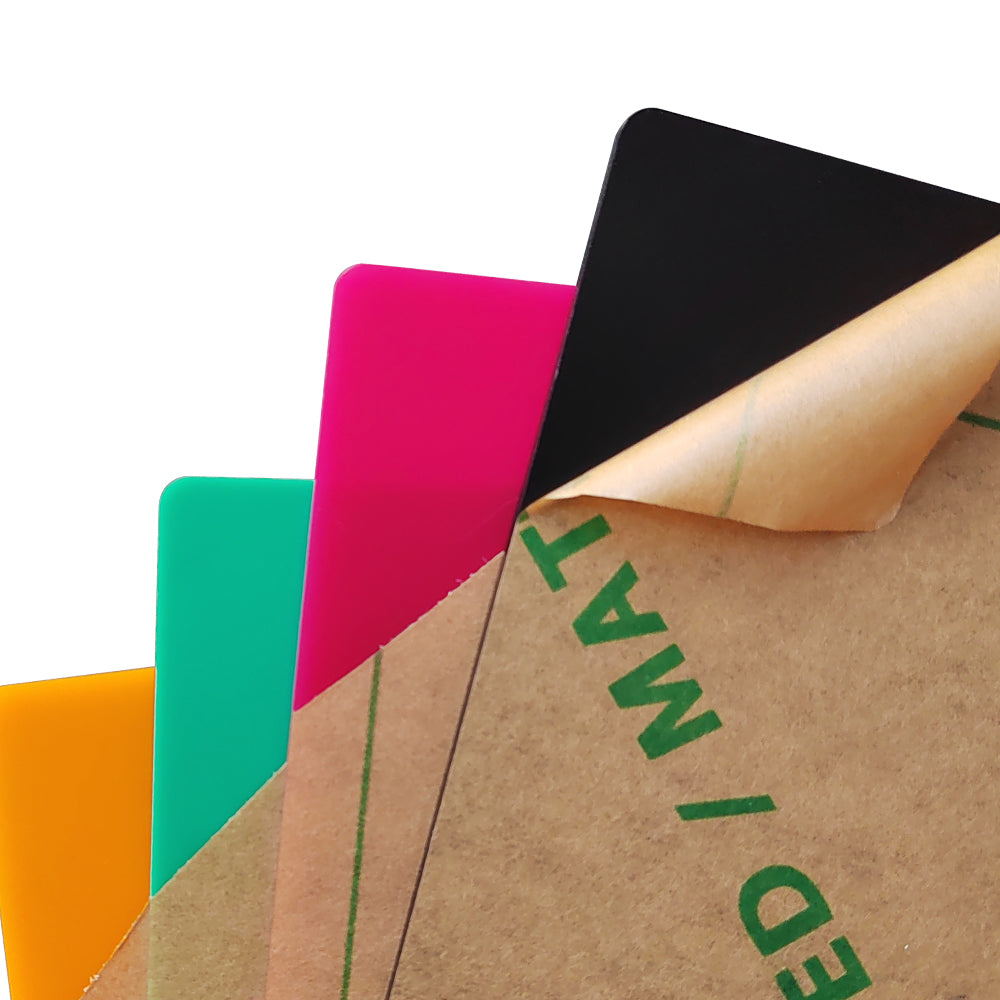
Versatility: available in many colors—opaque, transparent, frosted, fluorescent—making it popular for creative and industrial projects.
- Common Uses of Laser-Cut Acrylic:
- Home décor and signage
- Keychains, jewelry, display stands
- DIY crafts and maker projects
- Prototyping, enclosures, and product parts
- Lighting diffusers and edge-lit panels
In short, laser-cut acrylic is acrylic that has been shaped using a laser for a cleaner, smoother, and more precise finish than conventional cutting.

How to Laser Cut Clear Acrylic
Cutting clear acrylic with a diode laser is notoriously challenging because clear and transparent materials tend to reflect or pass through the 455–460 nm diode wavelength.
To achieve a clean and consistent cut, you must create a surface that allows the laser to absorb energy rather than reflect it.
Effective Methods to Cut Clear Acrylic:
- Apply a dark coating (black paint, marker, black masking film) to the cutting surface so the diode laser can absorb energy. This layer allows the beam to melt the acrylic instead of scattering.
- Use the “back-cut” technique, cutting from the underside after masking the bottom of the sheet.
- Reduce laser speed & increase passes to allow sufficient heating.
- Ensure strong air assist to prevent melting buildup, flare-ups, and edge discoloration.
- Use cast acrylic over extruded acrylic, as cast acrylic reacts better to laser heat and produces cleaner edges.
For users who need consistent and reliable acrylic cutting without coatings, a CO₂ laser (10.6 µm) is the recommended option.
What Thickness of Acrylic Sheets Is Best for Laser Cutting
The optimal acrylic thickness varies depending on the laser power and the project requirements.
Diode lasers excel at engraving but are more limited in cutting performance compared to CO₂ systems.
Recommended Thickness Guidelines:
- 1–3 mm acrylic → Best for diode lasers (20W–40W). This thickness allows stable cutting with multiple passes.
- 4–6 mm acrylic → Possible with high-power diode lasers (40W–60W) but requires slow speeds and many passes.
- 8–10 mm acrylic → Generally not practical for diode lasers; edges become rough and heat-affected.
- 10–20+ mm acrylic → CO₂ lasers only (one-pass cuts possible with 40W–100W CO₂ systems).
Key Factors That Influence Cut Quality:
- Acrylic type (cast vs extruded)
- Laser wattage and beam quality
- Cooling, airflow, and focal distance
- Cutting speed vs number of passes
If you need smooth, flame-polished edges, thinner cast acrylic (1–3 mm) gives the best results with diode systems.
What Color Acrylic Can Be Cut With a Diode Laser
Diode lasers (blue 455–460 nm) are selectively absorbed by dark or opaque colors, but poorly absorbed by clear, white, or light-colored sheets.
Colors That Cut Best With a Diode Laser:
- Black acrylic (absorbs exceptionally well)
- Dark blue/dark green
- Red acrylic
- Opaque matte acrylic sheets
- Frosted acrylic (partial absorption makes cutting easier)
Colors That Are Difficult or Impossible:
- Clear acrylic — laser passes through (requires coatings).
- White acrylic — reflects most blue light.
- Light-colored translucent acrylic — insufficient absorption.
Why colors matter:
Acrylic cuts only when the laser wavelength is absorbed.
Darker pigments convert laser energy into heat, melting the acrylic cleanly.
Light colors reflect or transmit the beam, producing almost no cutting effect.
How to Choose Laser-Safe Acrylic for Your Laser Cutter
To get clean cuts and avoid toxic fumes, it’s essential to choose the right acrylic. Here are the core points every laser user should know:
1. Use Real PMMA Only
Choose 100% PMMA (acrylic).
Avoid PVC, PC, ABS, PP/PE — they release toxic fumes, burn poorly, or can damage your laser.
2. Pick Cast Acrylic
Cast acrylic cuts cleaner and engraves better than extruded.
It produces polished edges and a strong frosted engraving effect.
3. Check Labels & Safety Info
Look for:
- “Cast Acrylic”
- “Laser-Safe”
- “PMMA”
Optional: MSDS, ROHS/REACH compliance
If the seller can’t confirm the material, skip it.
4. Choose Colors Your Laser Can Cut
- Diode lasers: dark, opaque colors or frosted acrylic
- CO₂ lasers: any color, including clear
5. Match Thickness to Laser Power
- Diode: 1–3 mm for best results
- CO₂: 2–10 mm easily
The End
Mastering acrylic selection is one of the fastest ways to improve your laser-cutting experience.
Pick the right material, use safe colors, and match the thickness to your machine—and you’ll instantly see better cuts and cleaner edges.
Continue exploring, keep experimenting, and enjoy the creativity that laser engraving unlocks.
Recent News

What Materials Does a Laser Cutter Cut Safely
Find out what materials does a laser cutter cut, which plastics to avoid, and how CO2, diode, and...

7 Best Laser Engravers Under $1000
Quick Answer:The best laser engraver under $1000 should be chosen by total setup cost, not machine price alone.For most...

CNC Vs Laser Cutter Which Tool Is Right For You
Compare CNC vs laser cutter tools for wood, acrylic, metal, 3D carving, precision, safety, and beginner projects to...