






















xTool M2 vs Falcon A1: Which Beginner Laser Engraver Is Better

Quick Answer:
Choose xTool M2 if your projects depend on color printing, stickers, paper crafts, and print-then-cut products.
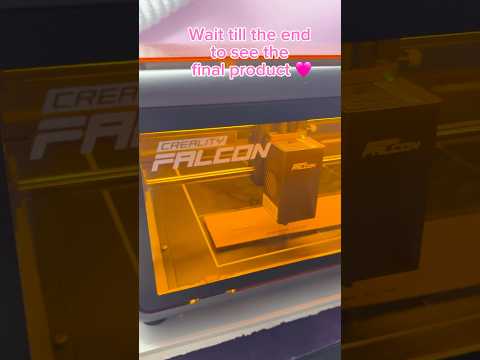
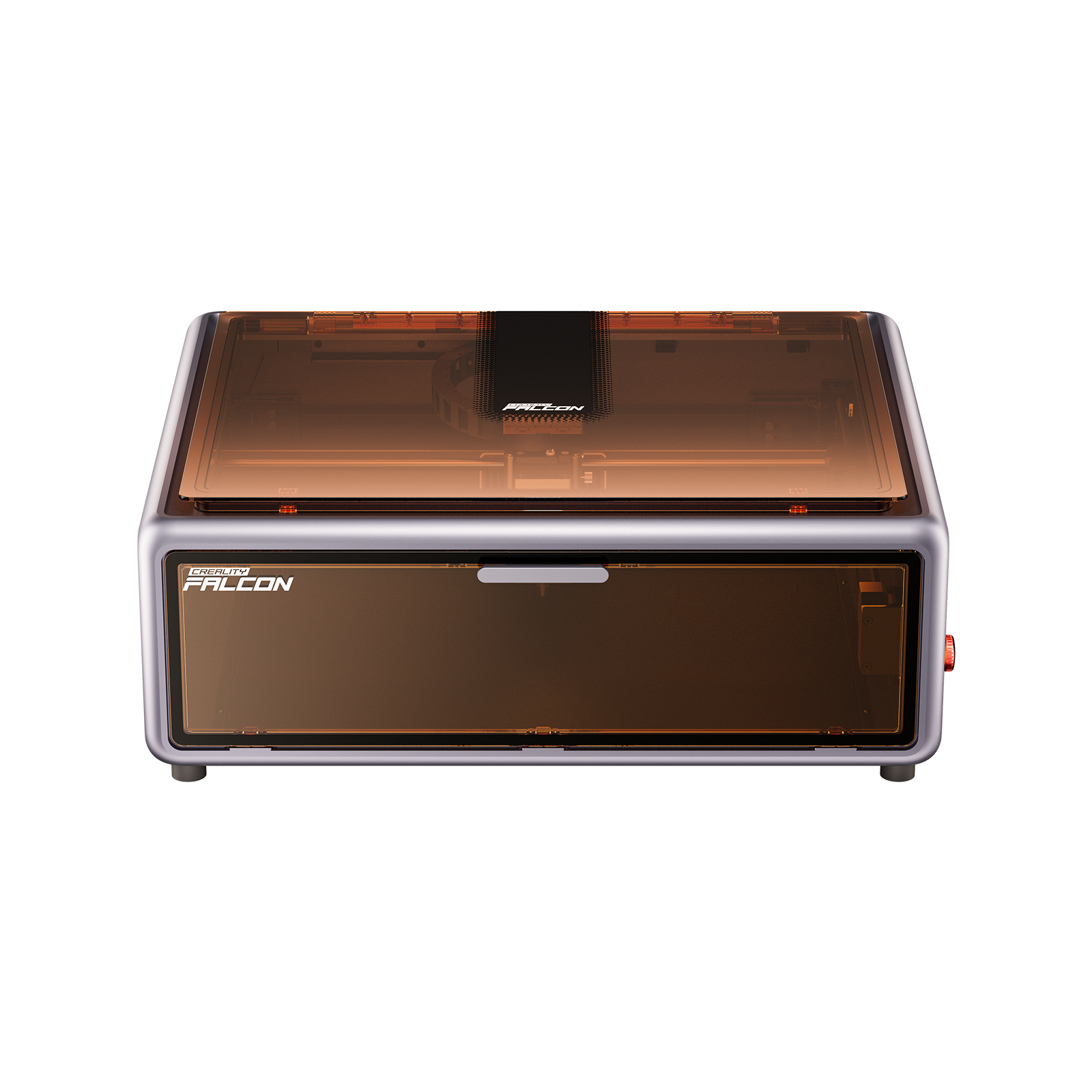
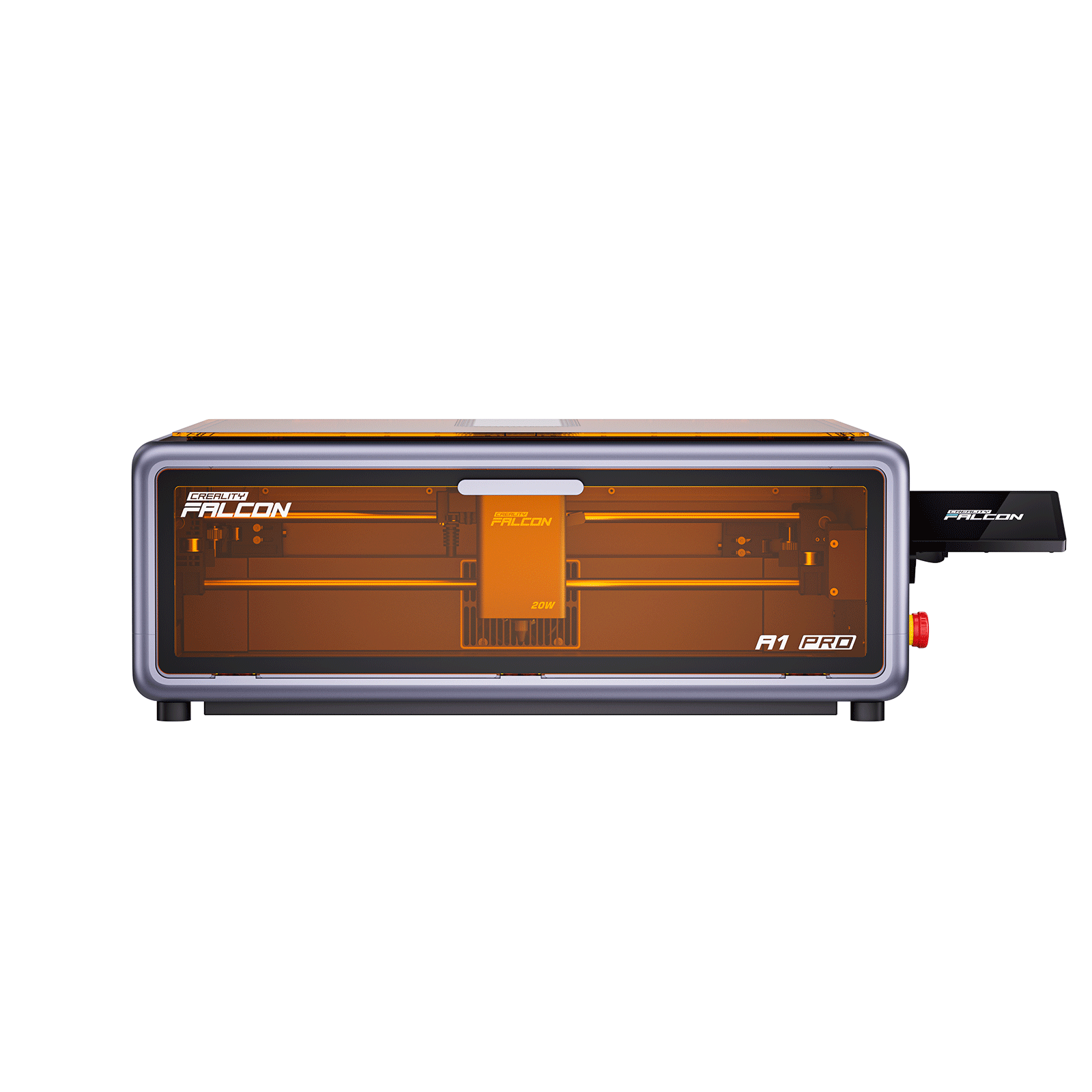
Choose Falcon A1 if you mainly want a simpler enclosed laser engraver for wood gifts, coasters, keychains, leather patches, and everyday beginner engraving without adding ink cartridges into the workflow.
The xTool M2 and Falcon A1 look similar at first because both target beginners who want a safer desktop machine. In real use, they are built around different buying logic.
xTool M2 is closer to a color craft machine with laser cutting and engraving. Falcon A1 is closer to a laser-first beginner engraver for people who want fewer workflow variables and a more direct path into wood, leather, acrylic, and small gift projects.
xTool publicly unveiled the M2 on May 27, 2026, with launch messaging around an accessible starting price and a limited-time launch discount. At the time of writing, the xTool M2 product page lists a New Launch Price From $549, with the final price depending on machine power, bundle, accessories, and protection plan options.
xTool M2 vs Falcon A1 at a Glance
| Category | xTool M2 | Falcon A1 |
|---|---|---|
| Best for | Color crafts, stickers, print-then-cut projects, paper products, personalized gifts | Beginner laser engraving, wood gifts, coasters, keychains, leather patches, simple cutting |
| Laser type | 10W or 20W blue diode; optional 3W IR module | 10W blue diode |
| Color printing | CMYK inkjet module available | No color inkjet printing |
| Working area | Laser mode: about 426 x 320 mm; inkjet mode: about 300 x 294 mm | 305 x 381 mm bed |
| Software | xTool Studio | Falcon Design Space, LightBurn, LaserGRBL |
| Main strength | Combines printing, cutting, and engraving in one craft workflow | Simpler enclosed laser workflow for everyday engraving projects |
| Main limitation | Low internal height, no traditional riser/honeycomb workflow, ink cartridge cost | No color printing, 10W laser only, not for advanced metal or CO2-style acrylic work |
5 Key Differences That Matter Before You Buy
1. Color Printing vs Laser-First Workflow
The biggest difference is not laser power. It is workflow. xTool M2 adds a CMYK inkjet module for color printing, which makes it attractive for stickers, gift tags, paper crafts, printed wood decor, and print-then-cut products. If your business idea depends on color artwork, M2 has a real advantage because it combines printing and laser cutting in one machine family.

Falcon A1 does not try to be a color craft printer. Its value is that the workflow is more focused. You design, position, engrave, or cut.
For many beginners, that is easier to understand and easier to maintain. If you mainly want wood coasters, keychains, leatherette patches, small signs, bag tags, and engraved gifts, Falcon A1 avoids the extra inkjet layer.

2. Internal Height and Fixture Space
Online user discussions around xTool M2 often focus on internal height. Buyers ask whether the usable object height is close to 1 inch, whether a honeycomb bed can fit, and whether the machine will support a riser later. This matters because height affects thick blanks, fixtures, rotary work, airflow, and how cleanly the bottom of a cut piece comes out.
Falcon A1 is also a compact enclosed machine, so it should not be treated as a large-format workshop laser. The difference is that Falcon A1 is not trying to replace a craft cutter, printer, and rotary workflow at the same time. For flat wood gifts, tags, coasters, and beginner engraving, its simpler material setup can feel more straightforward. For tall objects, both machines require buyers to check clearance before committing.
3. Cutting Power and Material Limits
xTool M2 offers 10W and 20W diode options, while Falcon A1 is positioned around a 10W diode laser. That means xTool M2 can offer more cutting headroom if you choose the 20W version. For people cutting thicker basswood or black acrylic, that power difference matters. However, both machines are still diode lasers, not CO2 lasers.
The practical boundary is important: neither machine should be described as a clear acrylic cutting machine. Diode lasers are much better with wood, leather, paper, cardboard, dark acrylic, coated materials, and selected surface marking workflows. If your main plan is clear acrylic signs, polished acrylic edges, or heavy production cutting, a CO2 laser is usually the better category.
4. Software and First Project Experience
xTool M2 is built around xTool Studio. That can be beginner-friendly, especially for templates, camera preview, and print-then-cut projects. The trade-off is that users who expect a LightBurn-first workflow may feel more restricted. Recent user discussions also show early questions around software support, phone compatibility, and connection setup because M2 is a new product.
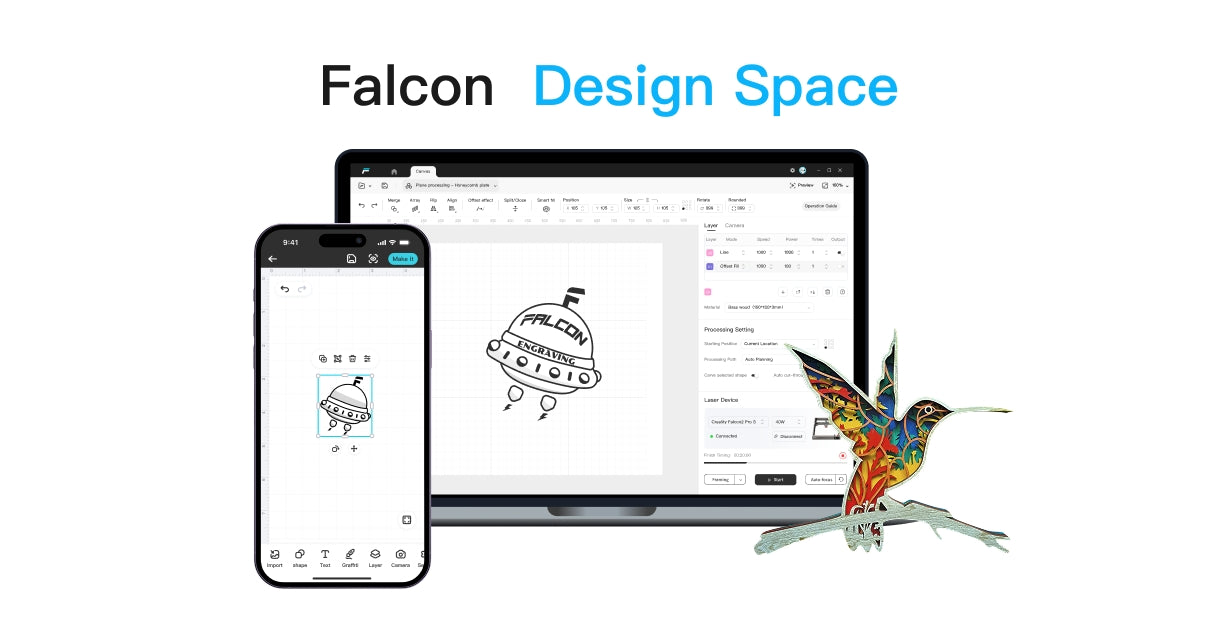
Falcon A1 supports a more familiar laser software path for many makers: Falcon Design Space, LightBurn, and LaserGRBL. For beginners who want guided setup, Falcon Design Space is the easier starting point. For users who already know LightBurn, Falcon A1 may feel less closed than M2.

5. Long-Term Cost and Consumables
xTool M2's color printing is useful, but it adds an ink cartridge cost that normal laser engravers do not have. This is one of the biggest user concerns online. If your products can sell for enough margin, ink can be part of the business model. If you mostly engrave wood or leather, ink may become a feature you paid for but rarely use.
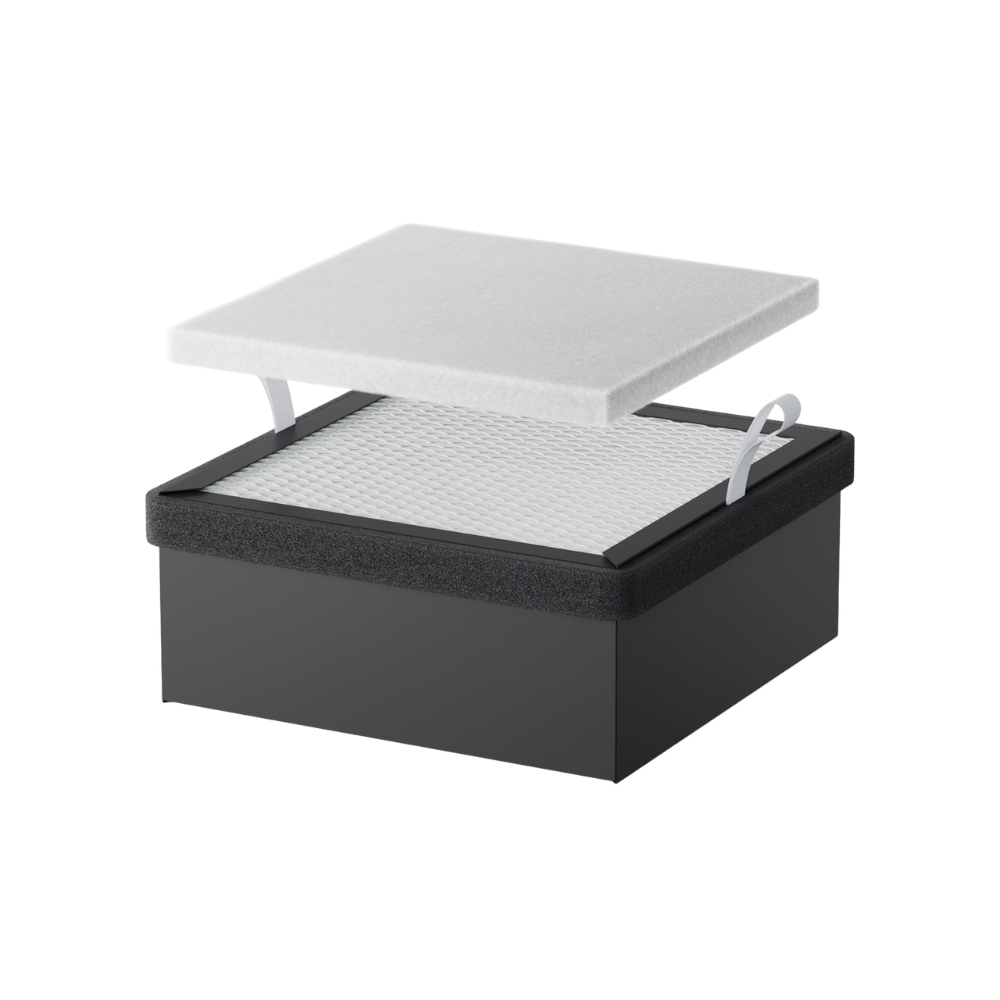
Falcon A1 has the more traditional laser cost structure. You still need materials, ventilation, cleaning, possible filtration, and replacement consumables over time. But you do not need to price every project around CMYK cartridge usage. For a laser-only gift business, Falcon A1 is easier to cost out.
Who Should Choose xTool M2
1. Sticker and Paper Craft Sellers
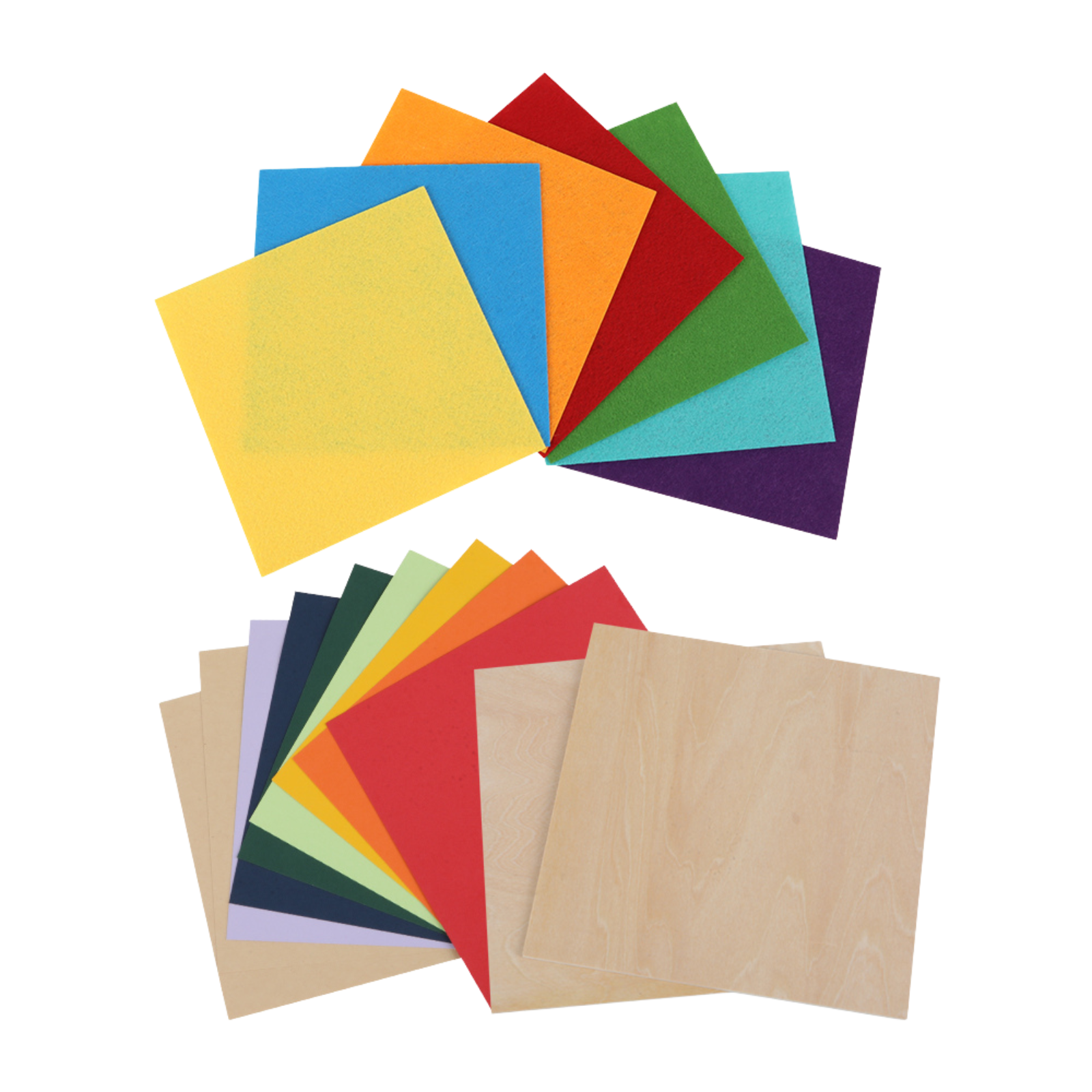
xTool M2 makes the most sense if your product ideas look like Cricut-style projects with a laser upgrade. Stickers, tags, party decor, printed cards, colorful labels, cake toppers, paper crafts, and small custom gifts all fit its pitch. The value is not only cutting. It is the ability to combine printing, camera positioning, and laser processing in one workflow.
2. Makers Who Need Color on the Product
If your designs depend on full-color artwork, xTool M2 has a clear use case. A laser-only machine can engrave beautiful marks, but it does not print colorful characters, patterns, logos, or graphics. For people selling colorful craft products, M2 gives more creative range than a basic diode engraver.
3. Buyers Who Accept Ink and Software Trade-Offs
The right xTool M2 buyer understands the trade-off. You get print-then-cut potential, but you also accept ink cartridges, software dependency, material safety questions, and internal height constraints. If those trade-offs match your product plan, M2 can be a clever craft machine. If they sound like friction, Falcon A1 may be the cleaner choice.
Who Should Choose Falcon A1
1. Beginners Who Want a Simple Laser Engraving Path
Why Choose This Product: Choose Falcon A1 if you want an enclosed beginner laser engraver for everyday gift projects without paying for color inkjet features you may not use.
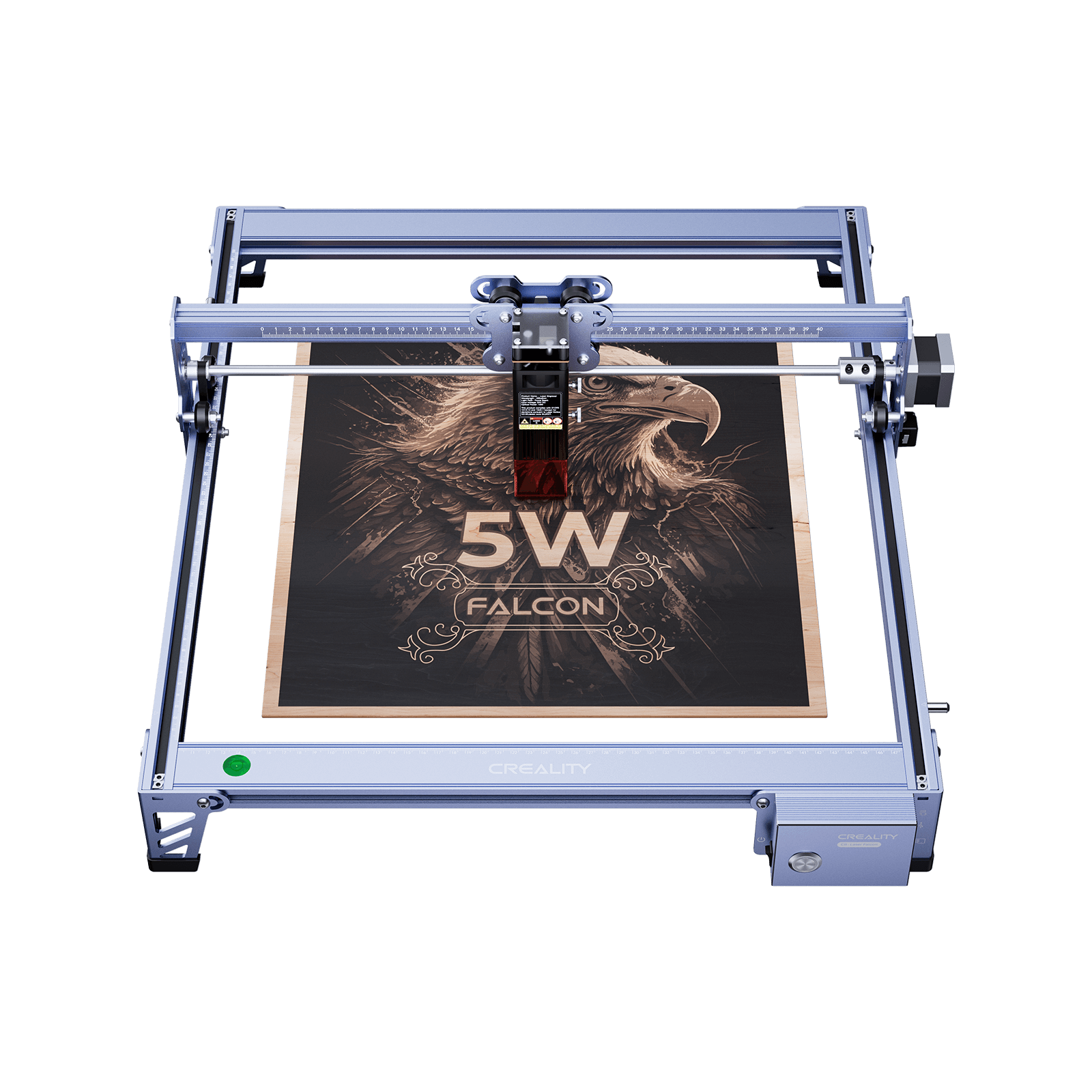
Falcon A1 is easier to recommend when the buyer wants to learn laser engraving itself. Its listed specs include a 10W diode laser, 305 x 381 mm bed, Class 1 enclosed design, Falcon Design Space, LightBurn and LaserGRBL support, 0.06 x 0.08 mm spot, and 10000 mm/min speed. That makes it a direct fit for wood, leather, acrylic tags, small signs, and beginner gift projects.
2. Wood Gift and Small Product Makers
Falcon A1 fits users who want to make coasters, keychains, cutting-board-style decor, bag tags, ornaments, leather patches, small signs, and personalized gifts. These projects do not need CMYK ink. They need reliable positioning, safe enclosure, ventilation planning, material testing, and a repeatable engraving workflow.

3. Users Who Want LightBurn Flexibility
If you already use LightBurn or plan to learn it, Falcon A1 has an advantage over xTool M2. Many laser users prefer LightBurn because it is widely used across machines and gives more control over laser-specific workflows. Beginners can start with Falcon Design Space and move into LightBurn later when they want deeper control.
6 Real User Concerns About xTool M2
1. The 1 Inch Height Question
One of the most repeated user questions is whether xTool M2's internal object height is close to 1 inch. This matters for cups, boxes, fixtures, thick blanks, and anything that is not flat. For a craft machine, low height keeps the body compact. For a laser user, low height can feel limiting.
2. No Riser and Honeycomb Concerns
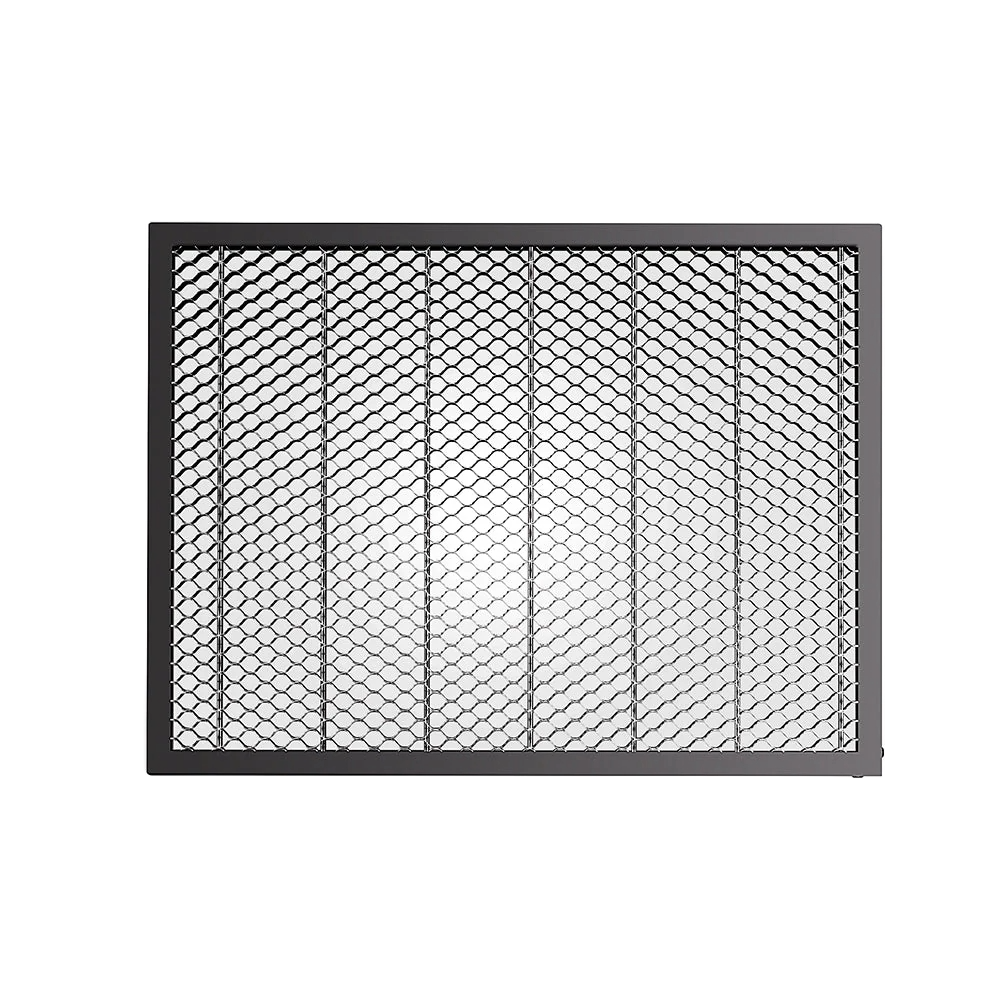
Users also ask whether xTool M2 supports a riser or honeycomb bed. The concern is practical: honeycomb beds help airflow, reduce backside scorching, protect the baseplate, and make cutting cleaner. Without that setup, users worry about baseplate burn marks, limited fixture options, and messier cutting results.
3. Clear Acrylic Confusion
Many buyers see acrylic in marketing and ask whether M2 can cut clear acrylic. The safer explanation is that diode lasers are much more suitable for dark or opaque acrylic than clear acrylic. This is not only an xTool M2 issue. It is a category limitation for blue diode lasers.
4. Vinyl and Sticker Safety
M2 attracts sticker and craft users, so vinyl questions are inevitable. The risk is that many vinyl materials are not laser safe, especially PVC-based vinyl. If a buyer wants stickers, they should use laser-safe sticker materials or compatible print-then-cut workflows rather than assuming all vinyl can be processed with a laser.
5. Ink Cartridge Cost
Color printing creates a long-term cost question. Users want to know how long cartridges last, whether they are proprietary, and whether they can be refilled. For a small business, this is not a small detail. Ink cost affects profit margin on every printed product.
6. Software Support and Device Recognition
Because M2 is new, early users have discussed software version support, connection issues, and whether xTool Studio works the way they expect. This does not mean the product cannot work well, but it does show that software maturity is part of the buying decision, especially for first-time laser users.
User FAQs About xTool M2 vs Falcon A1
1. Can xTool M2 Cut Clear Acrylic?
No, xTool M2 should not be treated like a CO2 laser for clear acrylic cutting. It uses a blue diode laser, so it is better suited to dark or opaque acrylic. If your main projects involve clear acrylic signs, transparent ornaments, or polished acrylic edges, a CO2 laser is usually the more realistic choice.
2. Is xTool M2 Too Short for Taller Objects?
This is one of the biggest user concerns. Many buyers ask about the internal height because M2 has a low-profile enclosed body. It can handle many flat craft projects, but taller objects, thick fixtures, and some rotary setups can feel limited. If you often engrave boxes, tall cups, or bulky items, check the usable clearance carefully before buying.
3. Does xTool M2 Support a Riser or Honeycomb Bed?
Users often complain that M2 does not have the same riser-style flexibility as some other desktop laser machines. The concern is not just height. A honeycomb bed can improve airflow, reduce backside scorching, and protect the baseplate. Without that setup, users may need extra care when cutting wood, paper, cardstock, or other materials that leave burn marks.
4. Can xTool M2 Cut Vinyl or Make Stickers?
xTool M2 can support sticker-style projects, but users need to be careful with material safety. Do not laser cut regular PVC vinyl, because it can release toxic and corrosive fumes. For sticker projects, use materials specifically marked as laser-safe or use the print-then-cut workflow with compatible paper or sticker sheets.
5. How Expensive Are xTool M2 Ink Cartridges?
The ink cartridge question comes up often because M2's color printing is one of its biggest selling points. Users worry that long-term costs may feel more like owning a printer than owning a normal laser engraver. If you plan to print many color designs, factor in ink replacement cost, cartridge availability, and whether your products can absorb that consumable cost.
6. Is the Rotary Attachment Included with xTool M2?
Many users ask this because M2 marketing shows cylindrical engraving use cases such as tumblers, bottles, and round objects. In practice, buyers should check the exact bundle before ordering. Rotary support may require a specific accessory or bundle, so do not assume every M2 package includes everything needed for cup engraving.
7. Is xTool M2 Better Than xTool M1 Ultra?
It depends on the project. xTool M2 is more attractive if you want a lower-cost color craft laser with camera positioning and print-then-cut potential. xTool M1 Ultra makes more sense if you want a broader craft toolset with blade cutting, pen drawing, and foil-style workflows. For laser-only beginners, the real question is whether you need M2's color printing or prefer a simpler laser engraving workflow.
8. Does xTool M2 Work with LightBurn?
This is a common software question from laser users who already know LightBurn. xTool M2 is designed around xTool's own software workflow, so buyers should not assume it behaves like an open LightBurn-first laser. If software flexibility matters to you, compare the supported software carefully before choosing between M2 and another enclosed diode laser.
9. Does xTool M2 Need Ventilation?
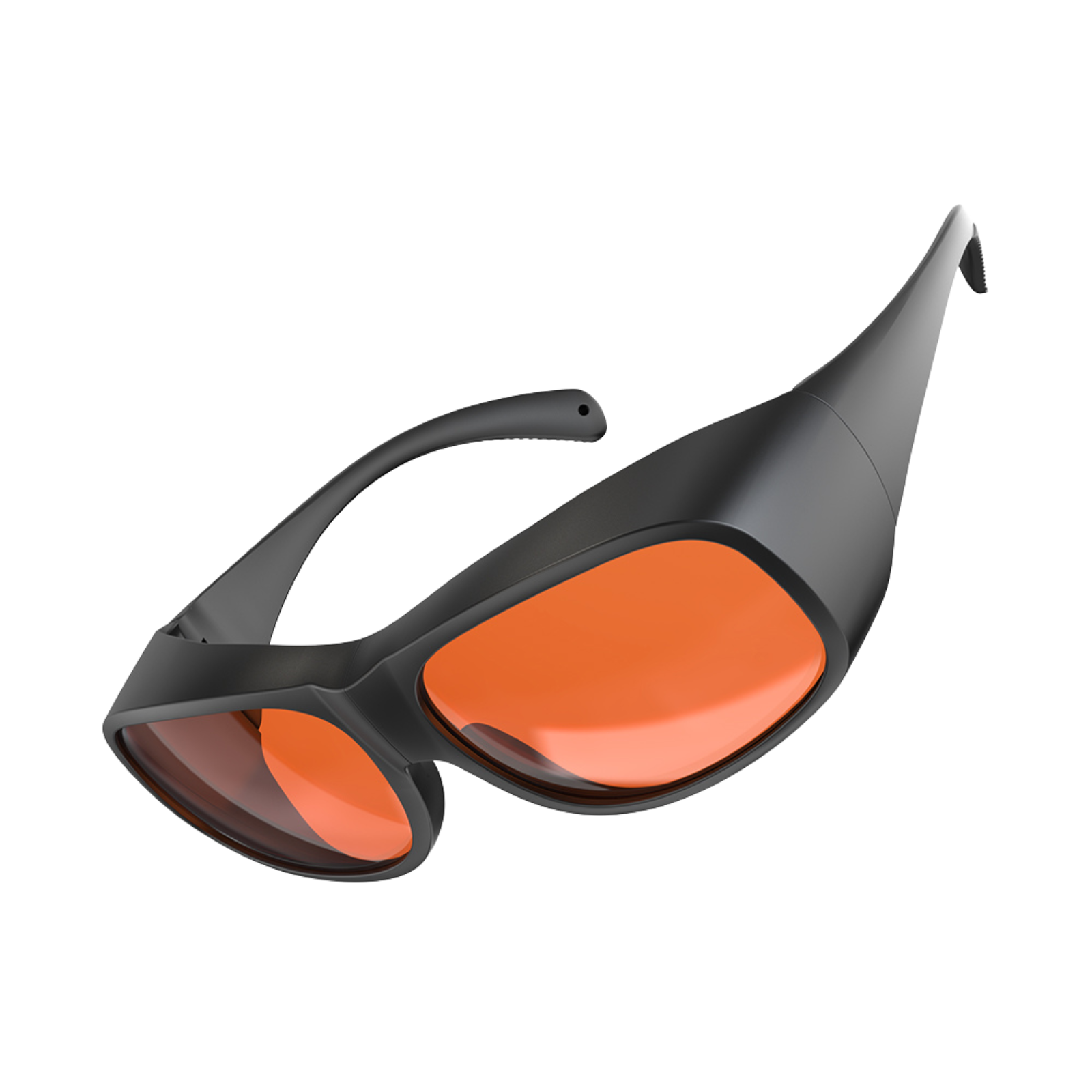
Yes. Even though M2 is an enclosed desktop machine, laser cutting and engraving still create smoke, odor, and particles. Wood, paper, leather, acrylic, and coated materials all need proper exhaust or filtration. An enclosure does not remove the need for ventilation, especially for indoor use or repeated cutting projects.
10. Is xTool M2 Good for a Small Business?
xTool M2 can be useful for a small craft business focused on stickers, paper crafts, colorful gifts, personalized decor, and print-then-cut products. It is less ideal if your business depends on thick wood cutting, clear acrylic cutting, deep metal engraving, or large-format production. For small business use, the key question is whether color printing adds profit or simply adds another consumable cost.
Conclusion
xTool M2 is the more interesting machine if your business depends on color printing, stickers, paper crafts, and print-then-cut products. It is a craft-first machine with laser capability. Its main risks are internal height limits, riser and honeycomb concerns, ink cartridge cost, vinyl safety, and a more closed software workflow.
Falcon A1 is the better fit if you mainly want a beginner enclosed laser engraver for wood, leather, acrylic tags, coasters, keychains, and everyday gift projects. It does not offer color printing, but that is also part of its appeal. There are fewer consumable variables, and the laser workflow is easier to understand.
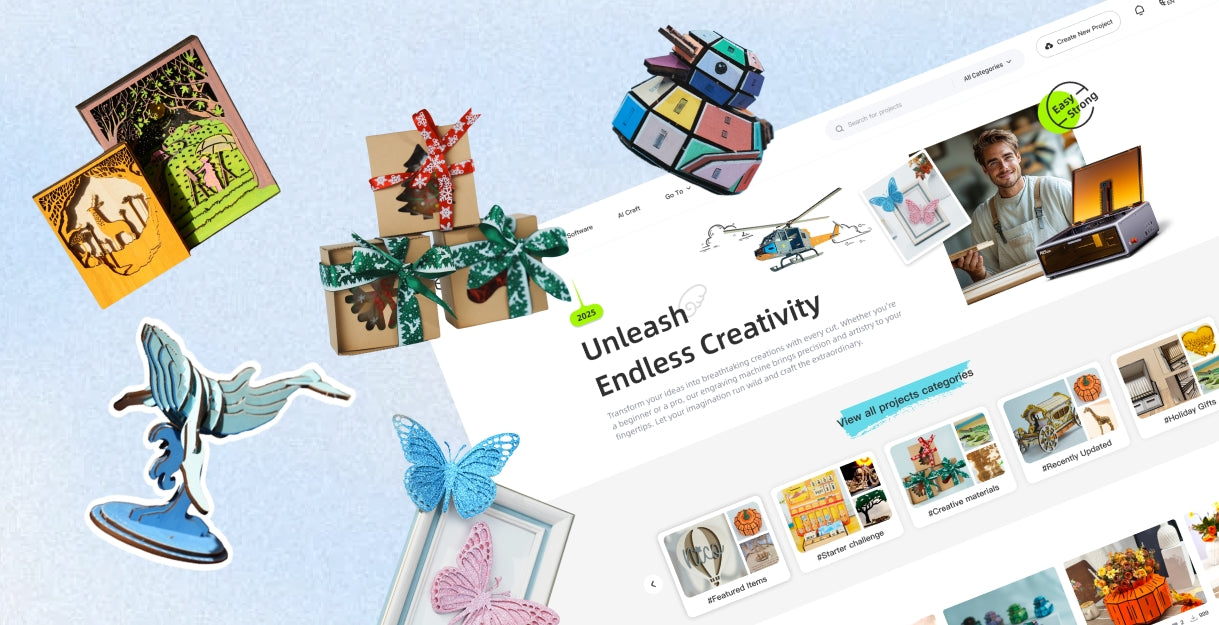
For project ideas and reusable laser design inspiration, you can also browse CraftSeek. Templates will not replace material testing, but they can help beginners move from a blank workspace to a real product idea faster.
Smarter Camera, Craft Easier
10W Diode Laser Engraver and Cutter

Recent News

Everything You Need to Know about Creality Falcon T1
Learn everything about Creality Falcon T1, including release date, regular price, laser modules, materials, safety, software, and who...

Glowforge Laser Cutter Price Explained
Learn what affects glowforge laser cutter price, from model tiers and hidden costs to materials, software, and alternatives.

7 Best Low Cost Laser Cutters by Price
Compare 7 low cost laser cutter picks by price, use case, safety setup, and cutting limits before choosing...