

























Fiber Laser Engraver Guide: Uses, Costs, and Buying Tips

Quick Answer:
A fiber laser engraver is best for permanent metal marking, serial numbers, QR codes, jewelry engraving, tool branding, and selected plastic marking.
It is not the right first choice for wood, clear acrylic, leather, or paper cutting. Before buying, match the machine to your material, marking depth, software workflow, work area, and production volume.
If you are comparing laser engravers, the hard part is not understanding that fiber lasers are powerful. The real challenge is choosing the right type of machine for the work you actually plan to do.
Fiber laser systems can be fast, precise, and durable on metal, but they are not one-size-fits-all tools. A buyer who needs stainless steel serial numbers has different requirements from someone engraving tumblers, jewelry, aluminum tags, or coated promotional items.
This guide explains how fiber laser engravers work, where they perform best, how they compare with CO2, diode, and UV lasers, and what to check before buying. The goal is simple: choose by material, result, workflow, and output volume, not by wattage alone.
Fiber Laser Engraver Basics for Buyers
1. What a Fiber Laser Engraver Actually Does
A fiber laser engraver is a marking and engraving machine designed mainly for metals and selected hard plastics. It uses a solid-state laser source and fiber amplification to create a focused beam that can produce permanent marks on stainless steel, aluminum, brass, titanium, gold, silver, and similar materials.
In real use, a fiber laser is usually chosen for metal marking, identification, branding, and repeatable customization. It can create logos, barcodes, QR codes, serial numbers, fine text, decorative patterns, and deeper engraved marks depending on power, lens, material, and settings.
2. How Fiber Laser Marking Works
A fiber laser starts with a seed laser diode. The light then passes through an optical fiber doped with rare-earth elements, commonly ytterbium, where it is amplified into a stable and concentrated beam. That beam is directed through a galvo head, where small mirrors move rapidly to draw the design across the material surface.
The laser can create different surface effects. Ablation removes material to make a deeper mark. Annealing changes the metal surface color without removing much material. Etching creates a shallow surface texture. The best method depends on whether you need appearance, durability, traceability, or depth.
3. Why Galvo Systems Feel Different from Gantry Lasers
Most desktop fiber laser engravers use a galvo scanning system rather than a moving gantry. Instead of moving the whole laser head across a large bed, the galvo mirrors move the beam extremely quickly over a fixed marking field.
This is why fiber laser engravers can feel much faster than many diode or CO2 gantry machines for small metal parts. The trade-off is that the standard work area is usually smaller, so part size and lens choice matter more than many beginners expect.
Best Uses for a Fiber Laser Engraver
1. Stainless Steel, Aluminum, Brass, Titanium, Gold, and Silver
Metal is the strongest reason to buy a fiber laser. A fiber source is well suited for permanent marking on stainless steel, aluminum, brass, titanium, gold, silver, copper, and many coated or anodized metals. Common projects include ID plates, jewelry, tools, machine parts, knives, tags, watches, and industrial components.
For business use, fiber lasers are especially valuable because the marks can be small, clean, repeatable, and durable. That makes them useful for metal marking, serial numbers, QR codes, barcodes, logos, safety labels, and traceability work.

2. Selected Plastics and Industrial Materials
Fiber lasers can also mark some hard plastics, including ABS, polycarbonate, nylon, Delrin, and certain engineering plastics. Typical uses include electronics housings, switches, cable labels, control panels, promotional products, and plastic industrial parts.
The important caution is that plastic behavior varies widely. Some plastics mark cleanly, some melt, some discolor unevenly, and some unknown materials can release unsafe fumes. For plastic work, test the exact material first and avoid unknown PVC or vinyl materials.
3. Jewelry, Tools, Tags, and Batch Production
Fiber lasers are useful when the same type of part needs to be marked again and again. Jewelry makers use them for names, dates, patterns, logos, fingerprints, and fine decorative details. Tool shops use them for part numbers, branding, and permanent identification. Small businesses use them for metal cards, pet tags, bottle openers, tumblers, and custom accessories.
The practical advantage is repeatability. Once the settings, fixture, focus, and layout are dialed in, a fiber laser can process batches quickly with less manual variation. For paid work, that repeatability often matters more than the maximum advertised speed.
Fiber Laser vs CO2, Diode, and UV Lasers
1. Fiber Laser vs CO2 Laser
A fiber laser is usually the better choice for bare metal marking and engraving. A CO2 laser engraver is usually the better choice for wood, acrylic, leather, fabric, paper, cardboard, glass engraving, and many non-metal cutting workflows.
If your main goal is stainless steel, aluminum, brass, titanium, or jewelry marking, fiber makes sense. If your main goal is cutting acrylic signs, wood boxes, leather goods, or craft materials, CO2 usually fits better. Do not buy a fiber laser expecting it to replace a CO2 cutter for organic materials.
2. Fiber Laser vs Diode Laser
A diode laser engraver is often a more approachable entry point for wood, leather, paper, bamboo, cardboard, dark acrylic, and coated material projects. It can be excellent for home gifts and craft workflows, especially when paired with enclosure, exhaust, air assist, and a stable bed.
A fiber laser is different. It is built around metal marking and selected plastic marking. A diode laser may mark some coated metals or use an IR module for selected surface marking, but it is not a replacement for a true fiber laser when deep or repeatable metal work is the goal.
3. Fiber Laser vs UV Laser
UV lasers are often used for glass, crystal, ceramics, certain plastics, and heat-sensitive materials where a lower-heat marking process is valuable. They can produce very fine marks, but they usually cost more and are harder to justify unless the material demands it.
Choose UV when your work depends on delicate marks on glass, crystal, or special materials. Choose fiber when your main work is metal marking, color marking on some metals, industrial IDs, tools, tags, jewelry, and durable part traceability.
| Laser Type | Best Fit | Common Limitation |
|---|---|---|
| Fiber | Metal marking, engraving, traceability, selected plastics | Not ideal for wood, leather, paper, or acrylic cutting |
| CO2 | Wood, acrylic, leather, fabric, paper, glass engraving | Not the easiest choice for direct bare metal marking |
| Diode | Beginner crafts, wood gifts, coated materials, light cutting | Limited for bare metal engraving and production speed |
| UV | Glass, crystal, ceramics, fine plastic marking | Higher cost and more specialized use cases |
4 Key Buying Factors Before You Choose
1. Power Output and Marking Depth
Power affects speed, depth, and the type of work the machine can handle. A 20W fiber laser is often enough for surface marking, fine text, logos, QR codes, and light engraving. A 30W class machine gives more headroom for faster work and moderate depth. A 50W or higher system is more suitable for deeper engraving, higher throughput, and more demanding production.
The practical rule is simple: buy enough power for your hardest regular job, not your easiest sample project. If you only mark stainless steel tags, a lower-power system may be fine. If you expect deeper engraving on tools, molds, or thicker parts, power becomes more important.
2. Lens Size and Working Area
The field lens controls the marking area and detail balance. A 110 x 110 mm lens gives finer detail for small parts. A 175 x 175 mm lens is a common all-around choice for desktop work. A 300 x 300 mm lens covers larger parts or batch layouts, but the spot size and fine detail may not be as tight.
Before buying, measure your most common workpieces. If you need to mark knives, plaques, larger tags, multiple parts, or tumblers with a rotary, check whether the machine supports the needed work area, fixture clearance, and focusing distance.
3. Software and File Workflow
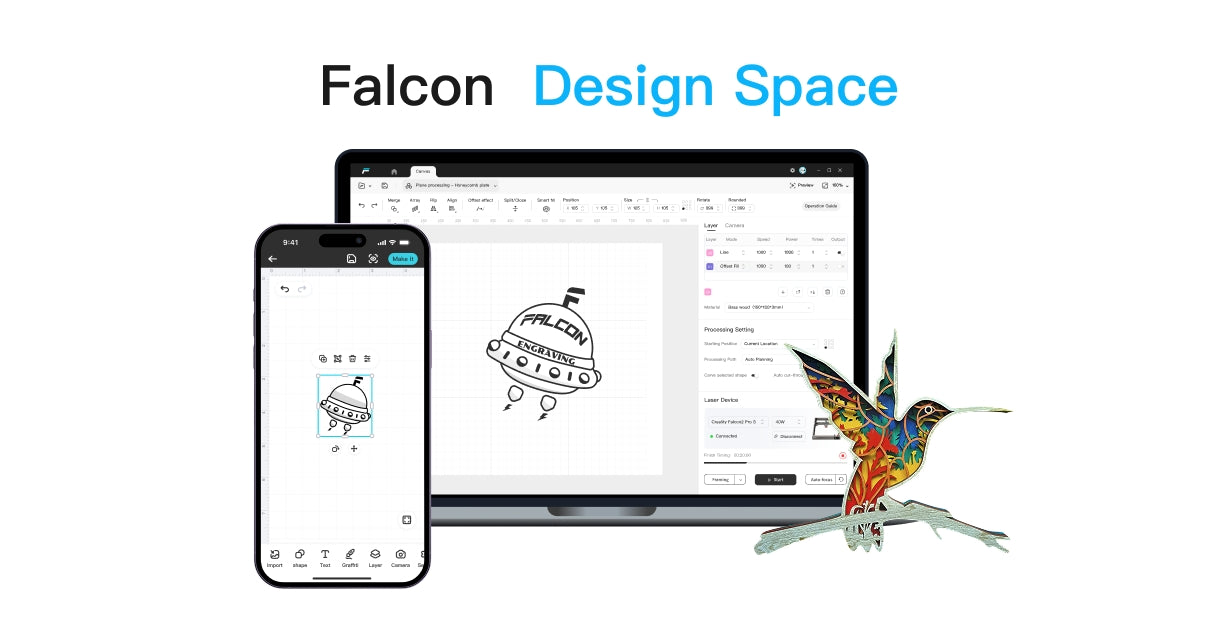
Software can make or break daily use. Many fiber laser systems use EzCad, which is common in the industry but can feel technical. Some newer systems support LightBurn or brand-specific software with a more guided workflow.
For frequent use, check whether your workflow supports SVG, DXF, AI, PNG, JPG, and PDF files. Also check whether you need camera positioning, template layouts, batch numbering, barcode generation, rotary control, or material test grids. A faster laser still wastes time if the software slows every job down.
4. Safety, Ventilation, and Material Testing
Fiber lasers are often cleaner than wood-cutting diode or CO2 workflows, but they still require safety planning. Reflections from metal can be dangerous, fumes from coatings or plastics need extraction, and open-cover operation requires proper eye protection and supervision.
Do not treat enclosure and exhaust as optional decoration. For home studios, classrooms, retail back rooms, and small workshops, safe materials, ventilation, eye protection, emergency stop access, and fire awareness are part of the buying decision.
Product Recommendations for Metal Marking Workflows
1. Creality Falcon T1 for Multi-Material Professional Work
Why Choose This Product: Choose Creality Falcon T1 if you want a compact workstation approach for metal marking and broader multi-process laser workflows instead of buying a single-purpose entry machine.
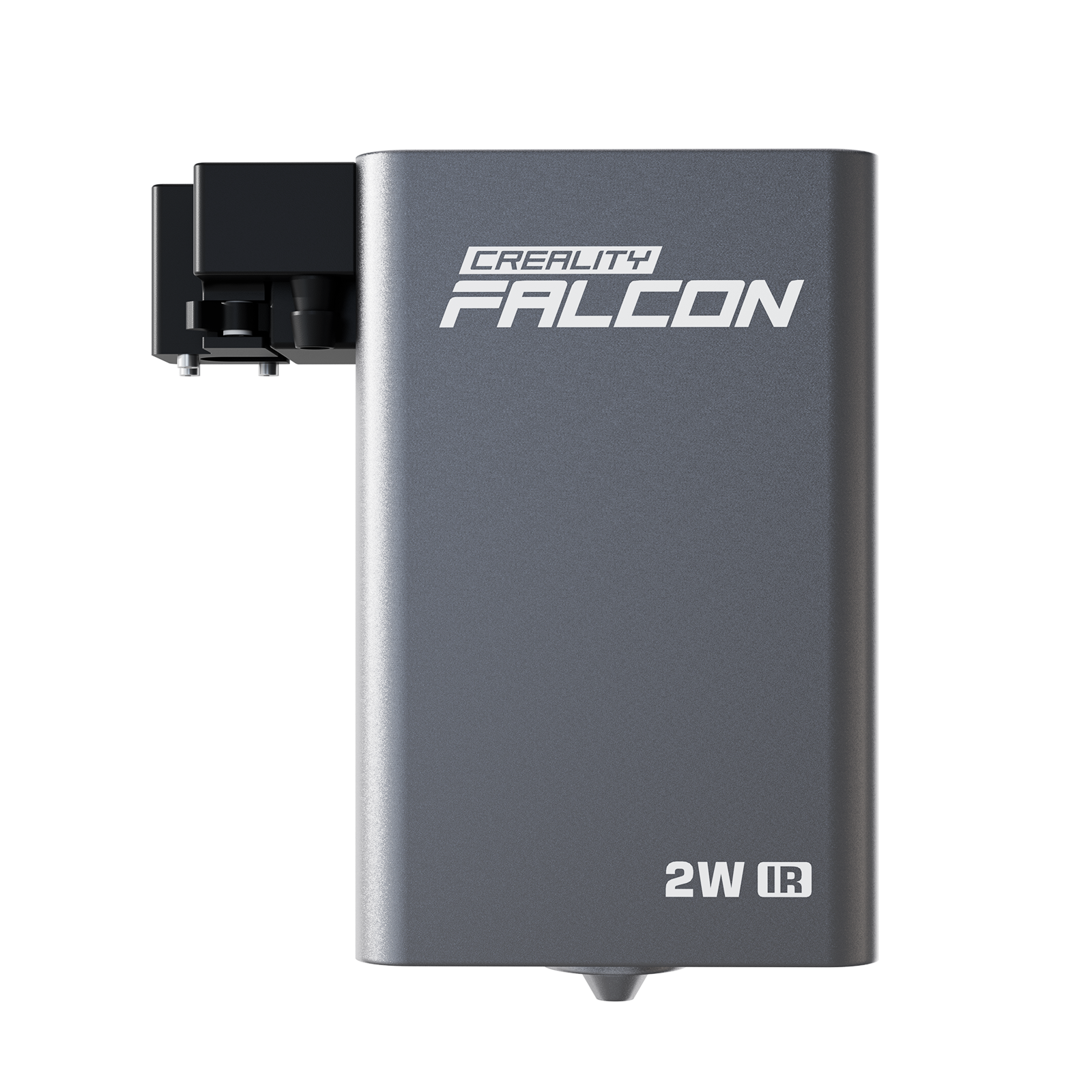
The Creality Falcon T1 is most relevant when your work goes beyond simple hobby engraving. It is positioned as a modular laser workstation with diode, fiber, UV, and MOPA options, so it fits users who need metal marking, color marking, selected plastic marking, glass or crystal workflows, and small-batch production in one system.

For a buyer focused specifically on fiber work, the value is not just the word fiber. The real value is whether the system fits your parts, your fixtures, your software process, and your production rhythm. If your jobs include metal tags, jewelry, tools, small accessories, QR codes, and repeat orders, a workstation-style machine can reduce setup friction compared with juggling separate tools.
Cost and ROI Expectations
1. What Desktop Fiber Laser Engravers Usually Cost
Desktop fiber laser engravers often sit above beginner diode machines and many entry CO2 machines. A basic desktop fiber setup may start in the lower thousands, while higher-power, enclosed, MOPA, rotary, camera, or automated systems can cost significantly more.
Because prices change with bundles, accessories, region, and promotions, it is better to compare by total setup cost. Include the machine, lens options, rotary attachment, ventilation, fixtures, spare lenses, software needs, support, and any safety accessories. The cheapest machine is not always cheaper if it slows production or requires extra workarounds.
2. Why Operating Costs Can Be Low
Fiber lasers are known for low ongoing operating costs. They do not use CO2 glass tubes, water chillers are often not required for small desktop fiber systems, and routine maintenance is usually centered on keeping optics clean, keeping the workspace safe, and maintaining fixtures.
The bigger cost is usually not electricity. It is time, rejected parts, poor fixturing, inconsistent focus, weak software workflow, or buying the wrong laser type for the material. For small businesses, repeatability is the real ROI driver.
3. When a Fiber Laser Can Pay for Itself
A fiber laser can make sense quickly when it handles paid jobs that are fast to run and easy to repeat. Examples include metal tags, ID plates, jewelry personalization, tool branding, QR codes, serial numbers, and small promotional products.
Payback depends on order volume, pricing, reject rate, setup time, and customer demand. A shop running frequent batches may justify a fiber laser faster than a hobby user making occasional gifts. The best buying question is not only how much the machine costs, but how often it will produce sellable work.
Common Buyer Concerns Before Purchase
1. Metal Results Depend on Settings and Surface Finish
Common buyer concerns often center on why one sample looks dark, another looks pale, and another engraves too deeply. The reason is that metal type, coating, polish, focus, frequency, speed, power, and hatch settings all affect the result.
Do not expect one universal setting for all stainless steel, aluminum, brass, or titanium. Build material test grids and save settings by material, supplier, and finish. This is especially important for customer-supplied blanks.
2. Rotary Work Needs More Than a Rotary Attachment
For tumblers, rings, pens, and cylinders, the rotary attachment is only one part of the setup. You also need enough clearance, stable focus, proper alignment, reliable grip, and a way to handle tapered objects.
Production rotary work can be profitable, but it can also create rejects if the coating varies, the object slips, or the layout is not tested. For repeat orders, make fixtures and document every setting.
3. Color Marking Is Real but Not Universal
Some fiber and MOPA workflows can create color effects on stainless steel and selected metals, but color marking is sensitive to material, surface finish, frequency, speed, and heat control. It should be treated as a tested process, not a guaranteed feature on every metal.
If color marking is a core buying reason, ask for real samples on the exact material you plan to use. Marketing photos are not a substitute for your own material tests.
FAQs About Fiber Laser Engravers
1. Can a fiber laser engraver cut metal?
Most desktop fiber laser engravers are better for marking and engraving than cutting. Some higher-power systems can cut very thin metal under the right conditions, but if your main goal is metal cutting, you should look at dedicated metal cutting equipment rather than a typical desktop marking machine.
2. Is a fiber laser engraver good for wood?
No, fiber lasers are not the right choice for normal wood engraving or cutting. Wood responds better to diode or CO2 lasers. If your main projects are wood signs, cutting boards, ornaments, leather patches, or craft gifts, a diode or CO2 workflow usually makes more sense.
3. Can a fiber laser engraver mark stainless steel?
Yes. Stainless steel is one of the most common materials for fiber laser marking. A fiber laser can create dark marks, logos, QR codes, serial numbers, decorative patterns, and sometimes color effects depending on the laser type, settings, and surface finish.
4. What power fiber laser should beginners buy?
For many desktop users, 20W can handle basic marking, while 30W gives more speed and engraving headroom. Users who need deeper engraving, faster batch work, or more demanding metal jobs may prefer 50W or higher. The right choice depends on the hardest material and depth you expect to run regularly.
5. Do fiber laser engravers need ventilation?
Yes. Metal marking can produce fumes, and coated metals or plastics can create more serious emissions. Ventilation is especially important indoors. Use known laser-safe materials, avoid unknown plastics, and plan extraction before production use.
6. Is a fiber laser better than a diode laser?
A fiber laser is better for direct metal marking and many industrial identification tasks. A diode laser is better for many beginner craft projects involving wood, leather, paper, bamboo, cardboard, and coated materials. They solve different problems, so the better choice depends on your material.
Conclusion
A fiber laser engraver is a strong choice when your work centers on metal marking, durable identification, jewelry engraving, tool branding, QR codes, serial numbers, and repeatable small-part production. It is not the most flexible laser type for every material, but it is one of the most effective tools for permanent metal results.
Before buying, focus on the practical questions: What material will you mark every week? How deep does the mark need to be? What is the largest part you need to fit? Will the software support your files and batch workflow? Do you have ventilation and safe material control?
If you answer those questions first, the right machine becomes much easier to choose. The best fiber laser engraver is not the one with the biggest spec sheet. It is the one that fits your material, your workspace, and your real production needs.
Lower Cost, Greater Potential
5-in-1 Laser Workstation

Recent News

12 World Cup Laser Engraving Ideas for Fans
Explore world cup laser engraving ideas for fan gifts, tumblers, coasters, signs, and safe soccer-inspired designs makers can...

What Materials Does a Laser Cutter Cut Safely
Find out what materials does a laser cutter cut, which plastics to avoid, and how CO2, diode, and...

7 Best Laser Engravers Under $1000
Quick Answer:The best laser engraver under $1000 should be chosen by total setup cost, not machine price alone.For most...